
Open Access in Biology
The publishing landscape in biology is being shaped by a large and steadily growing number of open access journals. Initiatives such as Plan S in Europe and Plan U in the United States (Sever et al., 2019), as well as the nationwide licence agreements negotiated by Projekt Deal (now the DEAL Consortium) in Germany, are also bringing about structural change towards open access as the standard publishing model in biology. The next step to be taken is the transition to diamond open access models. Preprint servers such as bioRxiv are now widely used, as they enable the rapid communication of research results before peer-review processes are completed. Besides scholarly articles and the underlying research data, software developments and AI models are important outcomes of the scientific process. Open access to these outcomes is ensured through a large number of international repositories and databases.
Open Access Journals
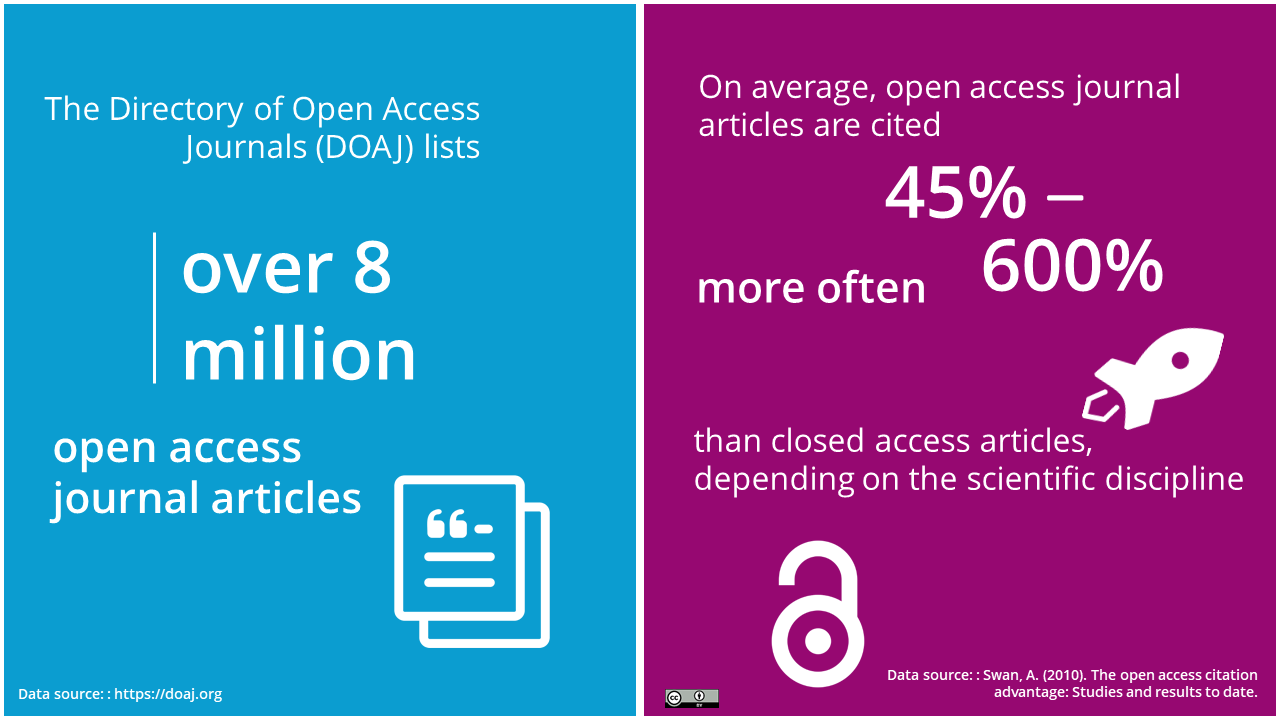
As of December 2025, the Directory of Open Access Journals (DOAJ) listed 897 journals under “Biology” and “Microbiology”, the most important of which include:
One of the driving forces of the open access movement in biology is the publisher Public Library of Science (PLOS). With the establishment of the journalPLOS Biology in 2003, it laid a foundation stone for the dissemination of the open access idea in the life sciences. Besides PLOS Biology, PLOS publishes further journals, including PLOS ONE, which is considered the archetype of a megajournal – a model that has since been adopted by many other publishers (e.g., Springer Nature with Scientific Reports). One important characteristic of these megajournals is that submitted manuscripts are assessed solely on the basis of their scientific validity. Rejections due to lack of relevance – as is often the case with many other journals – do not happen at megajournals. Thus, based on the number of articles published per annum, PLOS ONE is one of the largest scholarly journals in the world. Another publisher that plays a pioneering role in the area of open access is BioMed Central, which is now part of Springer Nature. It has a large portfolio of journals and is a co-founder of the Open Access Scholarly Publishers Association (OASPA). The open access publisher Frontiers also plays a formative role. It publishes numerous life sciences journals, is a member of OASPA, and has distinguished itself through its community model of peer review The open access journal Open Biology was founded by the Royal Society in 2011. And in 2012, the Howard Hughes Medical Institute, the Max Planck Society, and the Wellcome Trust founded the journal eLife with the declared aim of providing a high quality alternative to Nature, Science, and Cell. Open Research Europe is a diamond open access publishing venue that was initiated by the European Commission. It enables researchers to rapidly publish articles, data, and methods stemming from EU-funded projects. The platform combines preprint publication with downstream, transparent peer review. Especially in the life sciences, it is used to make results from Horizon Europe-funded projects rapidly accessible, to implement data practices that comply with the FAIR Data Principles, and to ensure a high level of visibility. It thus offers an important alternative to traditional publishing models and promotes a culture of open science in Europe.
Video zur Finanzierung von Open-Access-Artikeln
Quelle: Brinken, H. (2020). Finanzierung von Open-Access-Artikeln, open-access.network. https://doi.org/10.5446/49536 (CC BY 3.0 DE)
Open Access Books
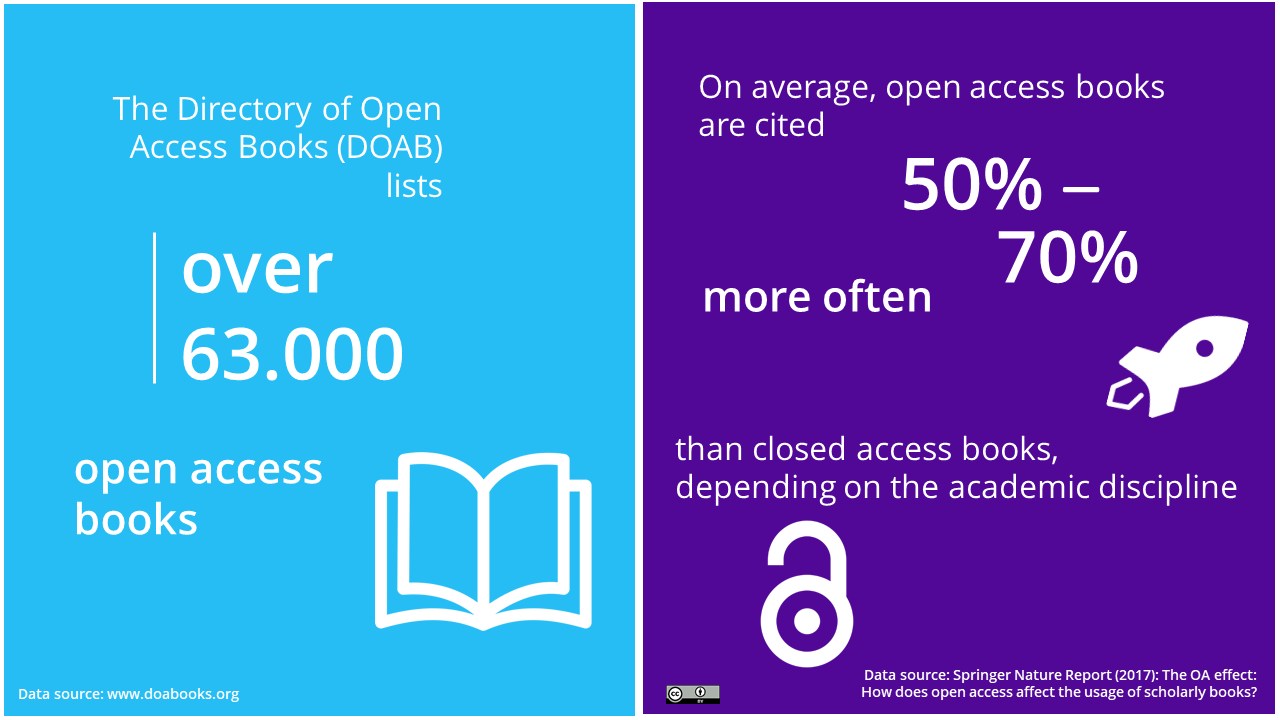
As of December 2025, the Directory of Open Access Books (DOAB) listed 1,550 titles in the category “Biology, life sciences”, while OAPEN listed over 125 titles under “Biology, life science”.
Although open access books have not played a prominent role in biology to date, there are numerous open access (text)books of outstanding quality. They include, for example, Microbiology, which is jointly published by OpenStax and the American Society for Microbiology Press.
Disciplinary Repositories
The most important repositories in biology include:
- bioRxiv: This preprint server specifically for the life sciences has been provided by Cold Spring Harbor Laboratory since 2013. Use of the server intensified during the COVID-19 pandemic, and in many life sciences disciplines, self-archiving preprints there is now the norm.
- arXiv: Operated by Cornell University Library, this preprint and post-print server has for some years now had a Quantitative Biology section with 11 categories.
- Preprints: This multidisciplinary platform also has a biology section.
- PaleorXiv: This subdiscipline-specific preprint server hosts and provides access to preprints from palaeontology.
- PUBLISSO-Fachrepositorium Lebenswissenschaften (FRL): Hosted by ZB MED, this repository offers authors the possibility of self-archiving their texts and research data.
- PubMed Central and Europe PubMed Central: These platforms are the largest venues in the world for post-print versions of publications. The US National Institutes of Health (NIH) requires that author accepted manuscripts (i.e. post-prints) of articles arising from NIH-funded projects be made publicly available on PubMed Central immediately after publication in a journal. These manuscripts do not necessarily have to be made available under an open licence, nor must they be part of the BMC Open Access Subset, which can be separately downloaded and searched.
Preprintsare now an integral part of publishing practice in biology. Initiatives such as Plan U (Sever et al., 2019) and ASAPbio (Accelerating Science and Publication in biology) advocate that preprints of all scholarly articles should be made freely available.
The Open Directory of Open Access Repositories (OpenDOAR) also provides an overview of relevant repositories.
Video über das Zeitveröffentlichungsrecht
Quelle: Brehm, E. (2021). Zweitveröffentlichungsrecht für Wissenschaftler*innen, open-access.network. https://doi.org/10.5446/51789 (CC BY 3.0 DE)
Open Science in Biology
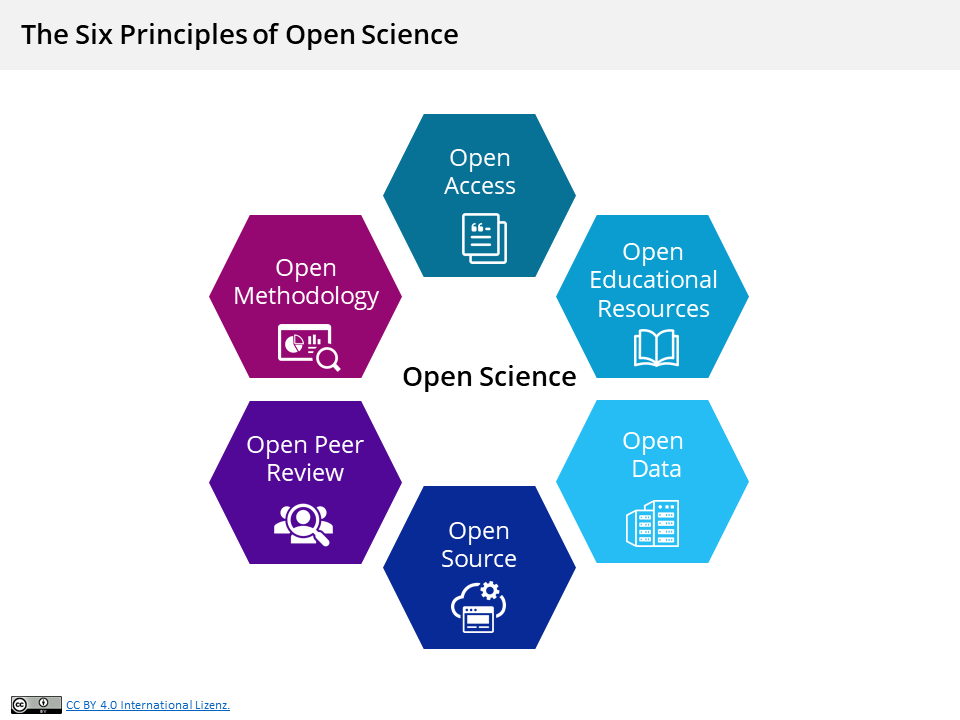
In the biosciences, there are many projects – also in collaboration with other disciplines – that develop as grassroots movements and address various aspects of the scientific process in the spirit of open science. They aim, for example, to increase the public online availability of research data (open data), software source code (open source), lab journals (open notebook science), manuscript peer reviews (open peer review), teaching materials (open educational resources), the quantification of the impact of publications (open metrics), and research funding proposals, including their reviews (Mietchen, 2014). However, open science also means opening up science to society (citizen science, e.g. the Helmholtz Centre for Environmental Research (UFZ) project Finde den Wiesenknopf [Find the Great Burnet]). Some journals also see a need to increase the transparency of research. For example, since 2014, PLOS ONE has required that all data underpinning research must be made available together with the publication. PLOS Biology and PLOS Genetics support the Research Resource Identification Initiative, which helps researchers to assign unique identifiers to their research materials and methods. In biology, too, numerous communities have adopted the FAIR Data Principles, in order to ensure more efficient and sustainable use of data and software.
For many years now, there have been repositories and databases for some data in biology. For example, via websites and application programming interfaces (APIs), the National Center for Biotechnology Information (NCBI) and the European Bioinformatics Institute (EBI), in particular, offer structured access to various data collections, such as sequences and structures of biomolecules like DNA, RNA, and proteins. As of December 2025, the Registry of Research Data Repositories, re3data, listed almost 1100 peer-reviewed data repositories in the area of biology.
Despite all these initiatives and offerings, it is clear that by no means all research communities in biology are being reached, and by no means all technical potential is being adequately used to ensure the effective sharing of knowledge. This discrepancy between theoretical possibilities and actual implementation can be explained, among other things, by the fact that the ways in which researchers and the outputs of their research are evaluated when jobs and funding are being allocated remain unchanged. The evaluation criteria are generally limited to formal publications in scholarly journals and the Journal Impact Factor. This practice impacts researchers’ motivation to make their results, data, and methods publicly available at an early stage, and thus prevents the broad and rapid reuse of these resources. A rethinking of the evaluation of research outputs is thus desirable. This is precisely the change to which the signatories of the Declaration on Research Assessment (DORA) aspire. Specifically, they advocate that, besides making the necessary infrastructure available, incentives should be created for making the results of scholarly research available to the public as early as possible and free of technical, financial, and legal barriers.
The National Research Data Infrastructure (NFDI), which is currently under construction in Germany, is another important project in the area of open science in biology. Within the framework of this project, new technical and structural foundations are being created for research data management in the whole of Germany. In the first two selection rounds of the NFDI Programme, several consortia from the life sciences and biomedical research (DataPlant, GHGA, NFDI4BioDiversity, NFDI4Health, NFDI4Immuno, NFDI4Microbiota) received funding. By making infrastructure, know-how, and training available, and also by developing and establishing (metadata) standards, these consortia aim to promote open and efficient science as well as the implementation of the FAIR Data Principles and cultural change in that direction.
Practical Tip
Finding Open Access Literature (in German)
References
- Mietchen, D. (2014). The Transformative Nature of Transparency in Research Funding. PLOS Biology, 12(12). https://doi.org/10.1371/journal.pbio.1002027
- Sever, R., Eisen, M., & Inglis, J. (2019). Plan U: Universal access to scientific and medical research via funder preprint mandates. PLOS Biology, 17(6). https://doi.org/10.1371/journal.pbio.3000273
Further Reading
- Rapp Learn, J. (2019). What bioRxiv’s first 30,000 preprints reveal about biologists. Nature. https://doi.org/10.1038/d41586-019-00199-6
- Rat für Informationsinfrastrukturen (RFII). (2016). Leistung aus Vielfalt. Empfehlungen zu Strukturen, Prozessen und Finanzierung des Forschungsdatenmanagements in Deutschland. https://rfii.de/download/rfii-empfehlungen-2016/
Content editor of this page: Prof. Dr. Konrad Förstner, ZB MED – Information Centre for Life Sciences (Last updated: December 2025)