
Open Access in Materials Science
Materials science focuses on the research, development, and application of materials. As an interdisciplinary research field located at the intersection of basic sciences (primarily chemistry and physics) and engineering methods, it aims to find new materials or improve and optimise existing ones for specific areas of application. The open access landscape in this field is correspondingly varied and reflects both the progress achieved and the challenges faced by the respective constituent disciplines. Materials science benefits from the different open access traditions in these disciplines. Materials science subfields that are branches of physics (e.g. solid-state physics) have long been using established open access structures – especially the preprint repository arXiv. However, subfields that are branches of chemistry or engineering are still reticent to adopt open access publishing models. One core characteristic of materials science is its close link to industrial application. As in the case of engineering, this closeness to industry leads to particular reservations regarding open access. To avoid endangering patent rights and licensing opportunities, materials science researchers are often reticent to publish research results that can be directly commercially exploited. The transformative agreements concluded by DEAL with major scholarly publishers such as Wiley, Springer Nature, and Elsevier also have positive effects for materials science, as these publishers have many materials science journals in their portfolios.
Open Access Journals
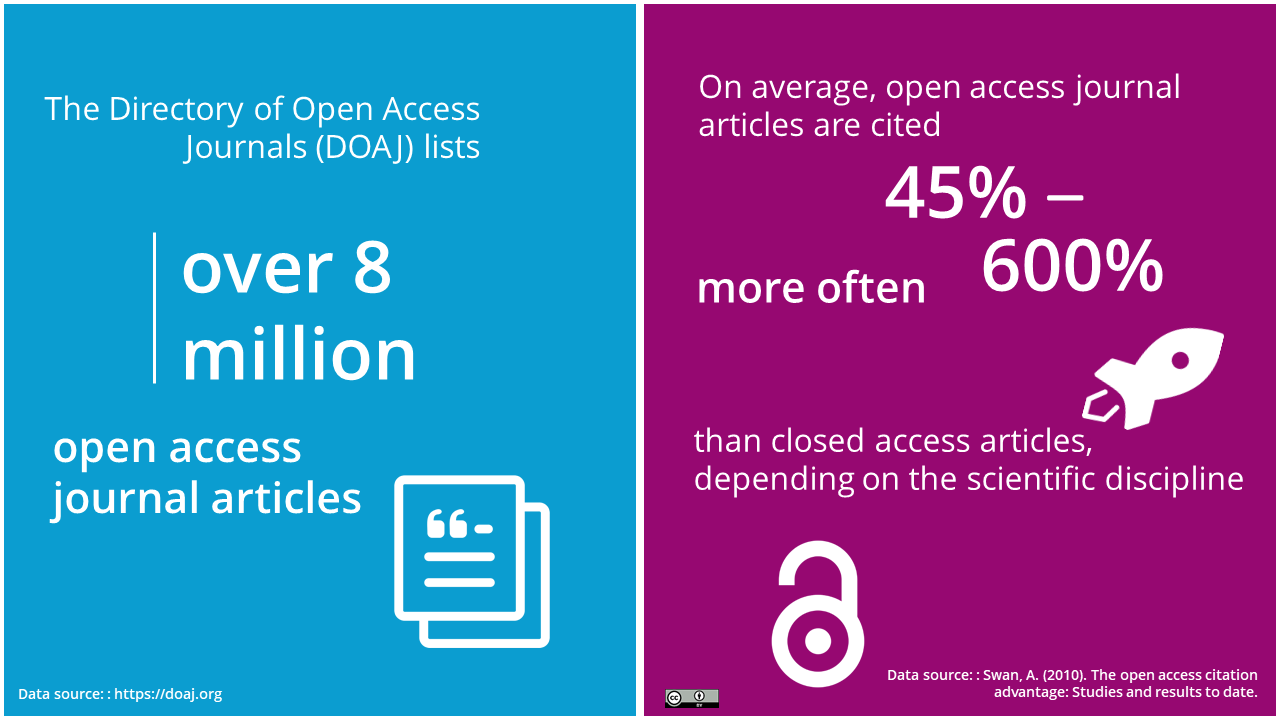
As of November 2025, the community-curated online Directory of Open Access Journals (DOAJ) listed 138 entries under “Materials of Engineering and Construction. Mechanics of Materials”.
The Electronic Journals Library’s (EZB) traffic lights system indicates the accessibility of journals in the subject area “Materials Science and Manufacturing Engineering”.
Important and renowned open access materials science journals include:
- Material Design & Processing Communications
- Materials Letters: X
- Science and Technology of Advanced Materials (STAM) und STAM: methods
- npj Materials Sustainability, npj Computational Materials, npj Quantum Materials, and npj 2D Materials and Applications
Other important open access journals in this field include:
- APL Materials
- Materials Research Letters
- InfoMat
- Oxford Open Materials Science
- Advanced Powder Materials
One example of a diamond open access journal of materials science is:
Although the journals listed above are just a small selection of open access materials science journals, they include journals published by relevant publishers or with a long open access tradition.
The Journal Recommender helps researchers to find suitable open access journals for their publications. This tool is based on B!SON, a recommender service for open access journals.
Source: Brinken, H. (2020). Finanzierung von Open-Access-Artikeln, open-access.network. https://doi.org/10.5446/49536 (CC BY 3.0 DE)
Open Access Books
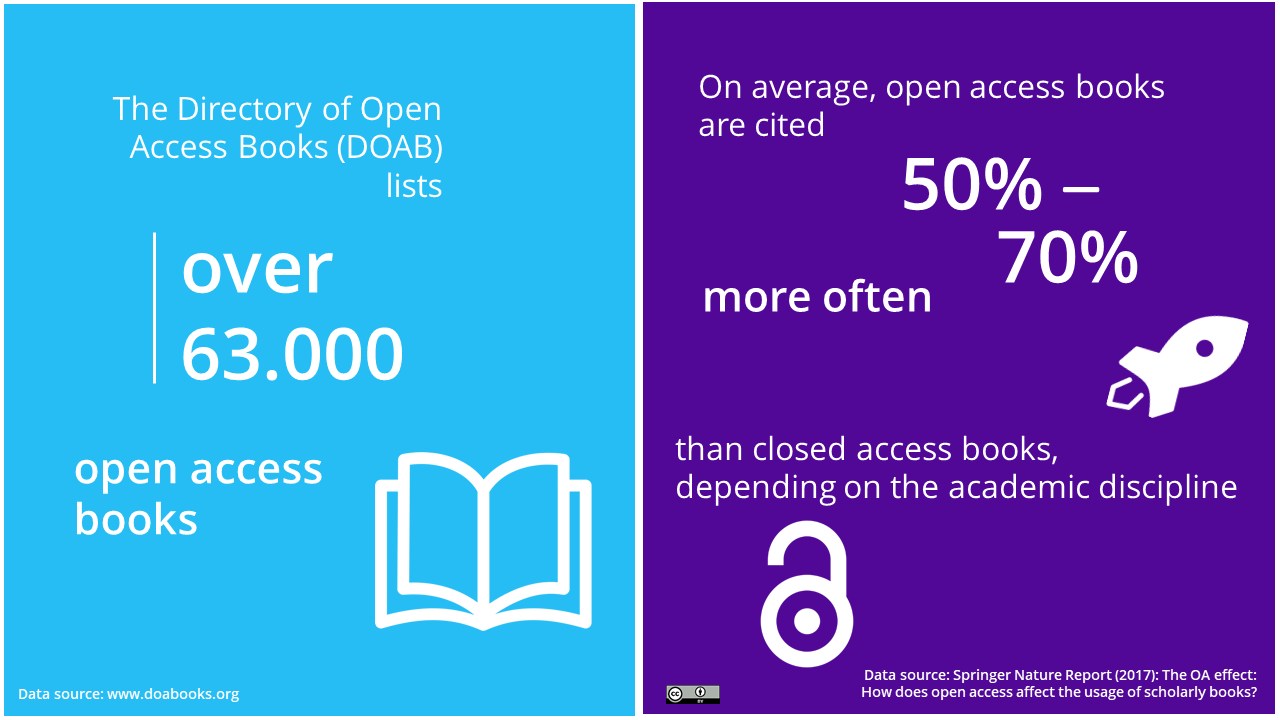
In addition to open access journals of materials science, there are also a wide range of open access books in this field. As of November 2025, the Directory of Open Access Books (DOAB) listed 341 titles under "Materials Science" and the online library and publication platform OAPEN listed 101 titles under "Materials Science".
Disciplinary Repositories
Various established preprint repositories cater for disciplines represented in materials science. They include:
- engrXiv – Established in 2016, engrXiv is a repository for engineering preprints and post-prints.
- arXiv – Established in 1991, arXiv is very strong in the areas of physics, mathematics, chemical physics, and related disciplines.
- ChemRxiv – Launched in 2017, ChemRxiv is an archive service for preprints in chemistry and related areas.
- bioRxiv – Founded in 2023, bioRxiv is a server for preprints in the life sciences.
Source: Brehm, E. (2021). Zweitveröffentlichungsrecht für Wissenschaftler*innen, open-access.network. https://doi.org/10.5446/51789 (CC BY 3.0 DE)
Open Science in Materials Science
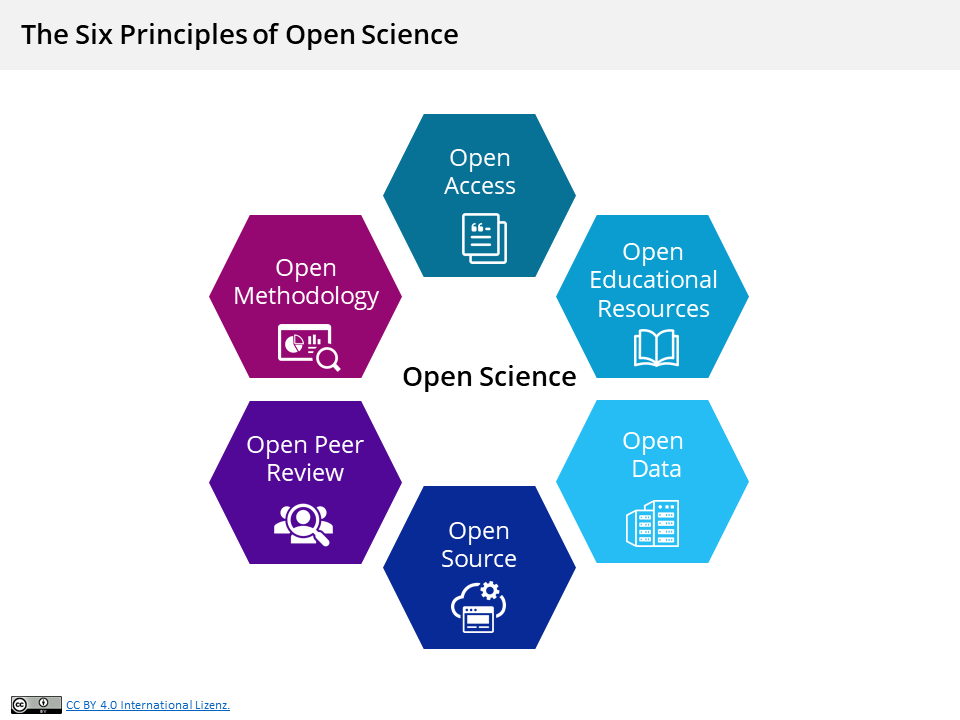
The Nationale Forschungsdateninfrastruktur (National Research Data Infrastructure; NFDI) bundles initiatives dedicated to the systematic collection, long-term preservation and storage, and provision of research data in Germany. For materials science and materials engineering, three consortia are of particular relevance:
- NFDI-MatWerk – A NFDI for materials science and materials engineering
- FAIRmat – A FAIR (i.e., findable, accessible, interoperable, and reusable) data infrastructure for condensed-matter physics and the chemical physics of solids
- NFDI4Ing – A NFDI for the engineering sciences
Together, they contribute to making data (re)usable in a sustainable way and to networking materials science research.
These consortia engage in exchanges with the Specialised Information Service (FID) Materials Science and Engineering – FID Materials Science for short – which provides various tools and services for researchers in materials science and materials engineering. The aim of the FID Materials Science project is to provide rapid and effective information and networking for the scientific community:
- Material Hub brings together information on materials from research and industry, thus enabling intuitive and efficient searches. Data providers benefit from the possibility of publicising their research results and materials.
- The Materials Guide can be used to find materials science databases. Search results can be filtered by material class and accessibility.
- Drawing on publicly accessible information, the Materials Map provides an overview of the materials science and materials engineering research communities, their actors, and these actors’ areas of expertise and publications.
There are several data repositories of relevance to materials science:
- NOMAD (management and sharing of materials science data)
- The repository enables researchers to share simulations of electronic structures by uploading and publishing input and output files.
- Since October 2021, the main software developments for the NOMAD Lab take place at the NOMAD Data Center at Humboldt-Universität zu Berlin (NOMAD HUB), which was established to host FAIRmat, the NFDI consortium for condensed-matter physics and the chemical physics of solids.
- Further services: encyclopaedia, AI toolkit, and archive
- Kadi4Mat
- This virtual research environment with a focus on materials science enables the combined use of a repository component (management and sharing of data) and an electronic lab notebook (ELN) component (analysis, visualisation, and conversion of data)
- Materials Cloud (EPFL, Switzerland)
- This platform for computational materials science is closely linked to the Automated Interactive Infrastructure and Database for Computational Science (AiiDA; enables the automation of simulations) and provides a data archive, various tools, and visualisations.
- Materials Project (Lawrence Berkeley National Lab, USA)
Further (international) repositories can be found at the Registry of Research Data Repositories, re3data.org, which as of November 2025 listed 59 entries under Materials Science.
In addition, materials science and manufacturing engineering databases can be found via the Database Information System (DBIS), which lists both freely available and licensed databases.
Open Educational Resources (OER) are educational materials of all kinds that can be accessed and used free of charge. As of November 2025, the portal for higher education teaching twillo listed 140 entries under "Materials Science and Materials Engineering". The Open Educational Resources Search Index (OERSI) also listed 140 results for "Materials Science and Materials Engineering" as of November 2025.
Further Reading
- Choudhary, K., Garrity, K. F., Reid, A. C. E., DeCost, B., Biacchi, A. J., Hight Walker, A. R., Trautt, Z., Hattrick-Simpers, J., Kusne, A. G., Centrone, A., Davydov, A., Jiang, J., Pachter, R., Cheon, G., Reed, E., Agrawal, A., Qian, X., Sharma, V., Zhuang, H., … Tavazza, F. (2020). The joint automated repository for various integrated simulations (JARVIS) for data-driven materials design. npj Computational Materials, 6(1), 173. https://doi.org/10.1038/s41524-020-00440-1
- Draxl, C., Scheffler, M. (2019). The NOMAD laboratory:
fromFrom data sharing to artificial intelligence. Journal of Physics: Materials, 2(3), 036001. https://doi.org/10.1088/2515-7639/ab13bb - Elsner, C., Rosenke, N., Weber, M., Hoppe, C., Drößler, S., & Hermann, S. (2019). Von Bottom up zu Top down: Umfrage: Forschende der Ingenieurwissenschaften erwarten klare Rahmenbedingungen von den Hochschulleitungen bei Open Access und Open Educational Resources. o-bib
-– das offene Bibliotheksjournal, 6(2), 80-–91. https://doi.org/10.5282/o-bib/2019H2S80-91 - Horton, M. K., Huck, P., Yang, R. X., Munro, J. M., Dwaraknath, S., Ganose, A. M., Kingsbury, R. S., Wen, M., Shen, J. X., Mathis, T. S., Kaplan, A. D., Berket, K., Riebesell, J., George, J., Rosen, A. S., Spotte-Smith, E. W. C., McDermott, M. J., Cohen, O. A., Dunn, A., … Persson, K. A. (2025). Accelerated data-driven materials science with the Materials Project. Nature Materials, 24(10), 1522–1532. https://doi.org/10.1038/s41563-025-02272-0
- Piwowar H, Priem J, Larivière V, Alperin JP, Matthias L, Norlander B, Farley A, West J, Haustein S. (2018). The state of OA:
aA large-scale analysis of the prevalence and impact of Open Access articles. PeerJ, 6, e4375 https://doi.org/10.7717/peerj.4375 - Talirz, L., Kumbhar, S., Passaro, E., Yakutovich, A. V., Granata, V., Gargiulo, F., Borelli, M., Uhrin, M., Huber, S. P., Zoupanos, S., Adorf, C. S., Andersen, C. W., Schütt, O., Pignedoli, C. A., Passerone, D., VandeVondele, J., Schulthess, T. C., Smit, B., Pizzi, G., & Marzari, N. (2020). Materials Cloud, a platform for open computational science. Scientific Data, 7(1), 299. https://doi.org/10.1038/s41597-020-00637-5
Content editor of this web page: Julia Hoffmann (TIB) and the FID Materials Science team (last updated: October 2025)