
Open Access in the Educational Sciences
Although open access as a publishing form is established in educational sciences, it continues to play a somewhat secondary role compared with proprietary publications. Journal articles are the preferred form of publication in educational sciences (Schmidt-Hertha & Müller, 2020), followed by monographs, edited collections, and contributions to edited collections, which together make up around one third of the publication output in this field (Abs et al., 2020). According to the German Education Index (FIS Bildung) labelling, as of August 2025, the full-text versions of 42% of the publication output, 32% of the listed journal articles, ca. 58% of the listed monographs and edited collections, and ca. 61% of the listed contributions to edited collections in educational sciences in 2024 were freely available. The German Educational Research Association (GERA/DGfE), one of the key institutions in educational sciences in the German-speaking area, supports a large number of open access initiatives, but it has not yet adopted a clear position on open access.
A further overview of open access developments in the German-language educational sciences is provided in a dissertation by Bambey (2016) and journal articles by Rummler (2021) and Schindler and Rummler (2018).
Open Access Journals
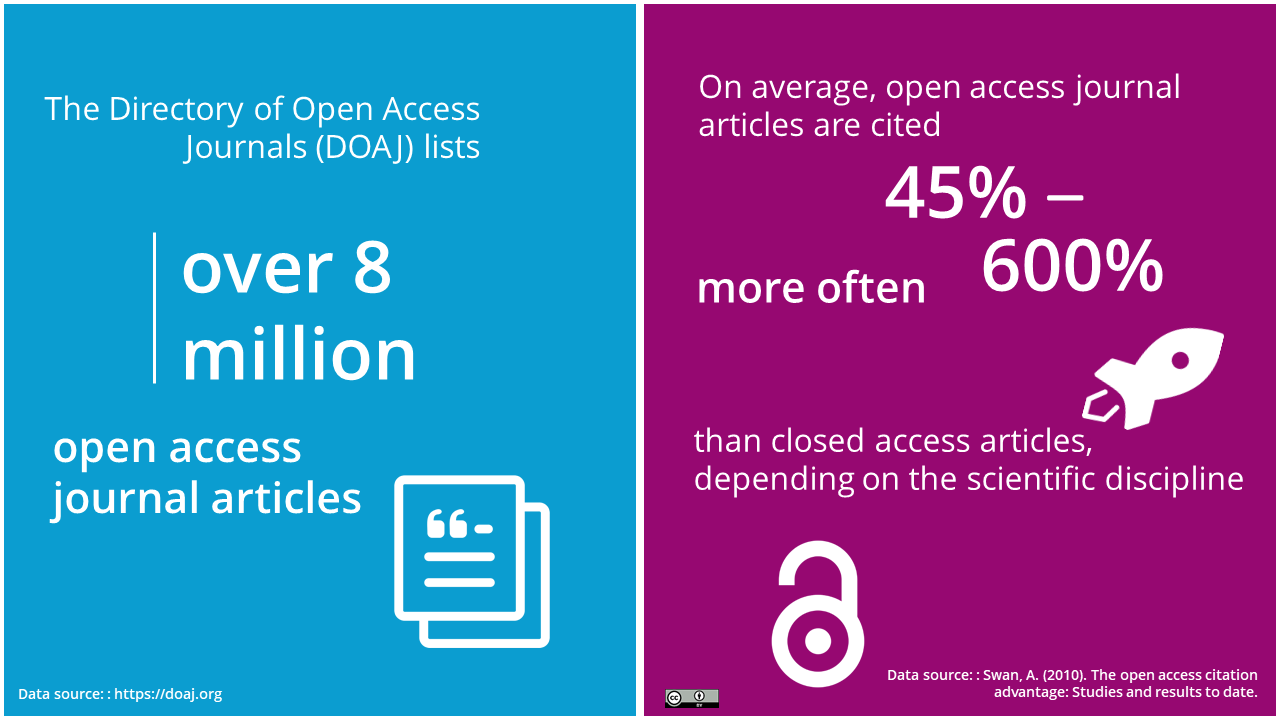
As of October 2025, the Directory of Open Access Journals (DOAJ) listed around 1,980 journals under the subject Education.
Important German-language open access journals that are listed in the DOAJ include:
- bwp@ DOAJ
- Die Deutsche Schule doaj
- Forum Qualitative Sozialforschung / Forum: Qualitative Social Research (FQS) DOAJ
- Magazin Erwachsenenbildung.at DOAJ
- MedienPädagogik. Zeitschrift für Theorie und Praxis der Medienbildung DOAJ
- Zeitschrift für Hochschulentwicklung (ZFHE) DOAJ
- Zeitschrift für Weiterbildungsforschung DOAJ
Important open access journals that are not listed in the DOAJ include:
- bildungsforschung
- PhyDid
- widerstreit-sachunterricht
- Die Österreichische Volkshochschule (ÖVH)
- on_education. Journal for Research and Debate
- Beiträge zur Lehrerinnen- und Lehrerbildung. Contributions up to and including 2013 and contributions from 2014 onwards can be found on peDOCS.
- Journal for Educational Research Online (JERO)
- journal für lehrerInnenbildung
- Erziehungswissenschaft
Journals in the educational sciences are often published open access by committed individuals with the help of their institutions and through voluntary effort. For example, the German Youth Institute publishes the magazine IMPULSE. Although, as mentioned earlier, the German Educational Research Association (GERA/DGfE) has not yet adopted a clear position on open access, its journal, Erziehungswissenschaft, is published in diamond open access. In addition, the above-mentioned DOAJ-listed journal MedienPädagogik, which is published by GERA’s Media Education Division, is also diamond open access. In Austria, the Forum Neue Medien in der Lehre Austria publishes the journal Zeitschrift für Hochschulentwicklung in diamond open access. And in Switzerland, the Swiss Society for Research in Education (SSRE) also publishes the quadrilingual journal Swiss Journal of Educational Research in diamond open access.
Some journals rely on support from funding agencies or sponsors. For example, the Magazin erwachsenenbildung.at is funded by the Austrian Federal Ministry of Women, Science and Research (BMFWF), while the online journal bwp@ is run inter alia through a cooperation with wbv Media and with support from sponsors.
Video zur Finanzierung von Open-Access-Artikeln
Quelle: Brinken, H. (2020). Finanzierung von Open-Access-Artikeln, open-access.network. https://doi.org/10.5446/49536 (CC BY 3.0 DE)
Open Access Books
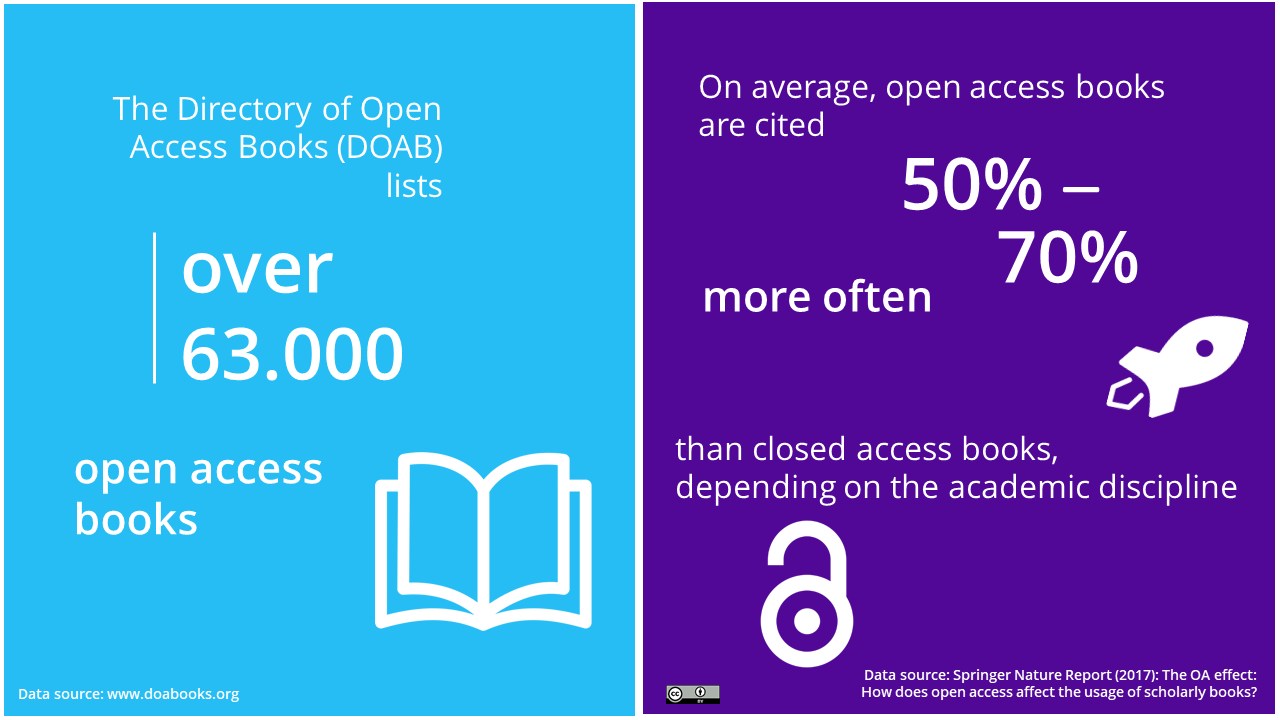
As of October 2025, the Directory of Open Access Books (DOAB) listed over 1,600 titles under the subject "Education", and the OAPEN Library listed over 1.200 titles. Furthermore, peDOCS provides a good overview of series in educational sciences. And the German Education Index (FIS Bildung Literaturdatenbank) indexes open access monographs and contributions to edited collections.
A large share of open access books in educational sciences are now published by university presses or institutional repositories (see Schindler & Rummler, 2018). Besides research reports and edited collections, these works include in particular monographic doctoral dissertations and habilitation theses. Although the German Educational Research Association (GERA/DGfE) has not yet adopted a clear position on open access, its divisions and committees publish various books and book series open access:
- Division 1 – Historical Education Research. Series: Jahrbuch Historische Bildungsforschung (Verlag Julius Klinkhardt)
- Division 7 – Vocational Education. Series: Jahrbuch der berufs- und wirtschaftspädagogischen Forschung (Verlag Barbara Budrich)
- Division 9 – Adult Education. Series: Schriftenreihe der Sektion Erwachsenenbildung (Verlag Barbara Budrich)
The Gesellschaft für Medien in der Wissenschaft (GMW) published the conference proceedings series Medien in der Wissenschaft in open access with Waxmann Verlag until 2022.
Furthermore, various publishers support the publication of open access books in educational sciences. They include Verlag Julius Klinkhardt, Barbara Budrich, Nomos, Beltz Juventa, wbv Media, transcript, Waxmann, and Werner-Hülsbusch-Verlag.
Disciplinary Repositories
The most important repositories in the educational sciences include:
- peDOCS: the disciplinary repository of DIPF – Leibniz Institute for Research and Information in Education for the areas educational research, educational science, and subject didactics.
- DIPFdocs: DIPF’s institutional repository.
- texte.online: publications on adult education of the German Institute for Adult Education (DIE).
- Scripta Paedagogica Online: digital text archive on the history of education in the German-speaking area (holdings include, inter alia, journals, teacher registers, school programmes).
- VET Repository: the central repository of the Federal Institute for Vocational Education and Training – BIBB for literature in the area of research on vocational education and training (VET).
An overview of relevant repositories is also provided by the Open Directory of Open Access Repositories (OpenDOAR).
Video über das Zeitveröffentlichungsrecht
Quelle: Brehm, E. (2021). Zweitveröffentlichungsrecht für Wissenschaftler*innen, open-access.network. https://doi.org/10.5446/51789 (CC BY 3.0 DE)
Practical Tip
Finding Open Access Literature (in German)
Other Offerings
As a virtual specialised education library, the Education Research Portalis the central point of access for literature searches in (German-language) educational sciences. It is run by the Information Centre for Education (IZB) of DIPF – Leibniz Institute for Research and Information in Education in Frankfurt am Main. The development of the portal was funded by the German Research Foundation (DFG). The offering, which can be used free of charge, is divided into three sections, Literature & References, Research Data in Education, and Research Information:
- In the Literature & Referencessection, users can conduct searches, report publications that are not yet indexed in the database, publish documents via peDOCS, or avail of the services of the Specialised Information Service for Educational Science and Research.
- The Research Data in Education section contains comprehensive studies in empirical education research that have been documented for the long term. In addition, there is a central access point to descriptive information about the studies (e.g. survey instruments used, research data collected, information material on research data management).
- The Research Information section provides a thematic compilation of relevant Internet sources for and about science and research in the area of education.
The Education Research Portal has been online since August 2005. Following a complete overhaul, it was relaunched in September 2017.
Open Science in the Educational Sciences
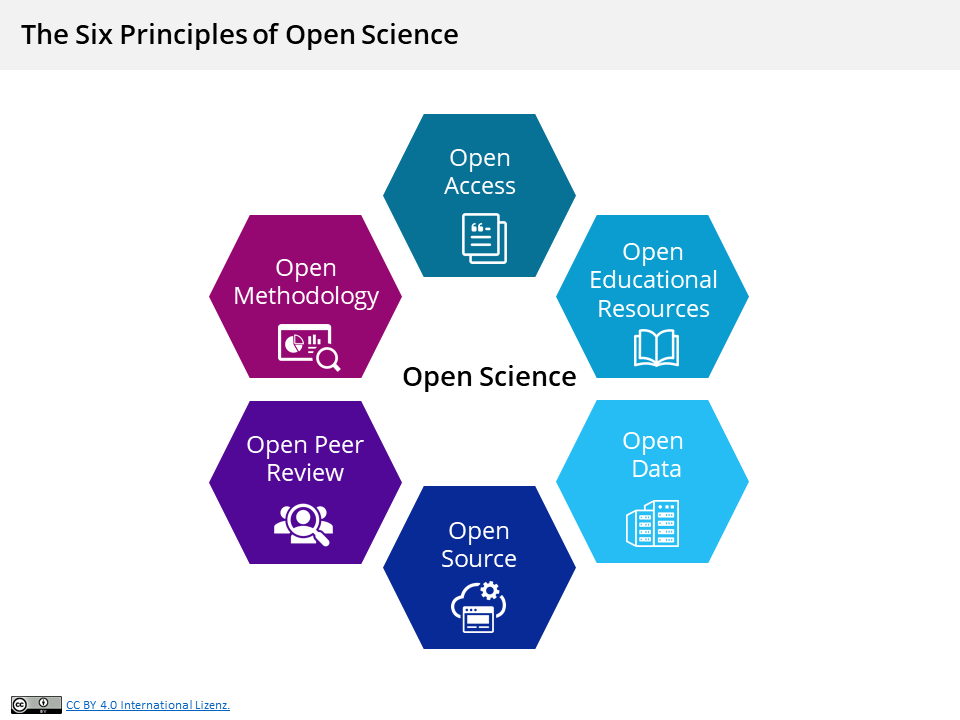
In educational sciences, there are also other movements in the area of open science beyond open access. For example, a special issue of the journal Erziehungswissenschaft, Issue 61 (2-2020), entitled: “Neue Formen der Archivierung, Bereitstellung und Nachnutzung von Forschungsdaten” [New Forms of Archiving, Providing, and Reusing Research Data], which brought together arguments on open science and open data, sparked a debate within educational sciences on new forms of research and data collection and the requirements that these models involve. The special issue also addressed discernible limitations and reservations, especially regarding data protection and the use of open research data and processes. Nonetheless, open science practices and forms of open access publishing will also change things in educational sciences, as the open handling of research data is supported in principle. The German Educational Research Association (GERA/DGfE), the Society for Empirical Educational Research (Gesellschaft für Empirische Bildungsforschung, GEBF), and the Gesellschaft für Fachdidaktik (GFD) have published a joint statement with recommendations on the archiving, provision, and reuse of research data in the context of education and subject didactics research.
At an international level, as of November 2025, the registry of research data repositories re3data listed 100 open research data portals and repositories under “educational research”. In the German-speaking area, the portal Forschungsdaten Bildung indexes research data via the German Network Educational Research Data (Verbund FDB) and provides information on sharing and managing research data in education research. Engagement with open science and the adaptation of open science to the disciplinary framework conditions and possibilities can increasingly be observed in educational sciences (van Dijk et al., 2021; Krammer & Svecnik, 2020; van der Zee & Reich, 2018).
Furthermore, educational sciences are also influenced by the open educational resources (OER) movement. By explicitly calling for open access to education, educational opportunities, and educational materials, this thematic field follows the lead of historical pedagogical precursors (Deimann, 2020; Hug, 2014). In recent years, an increasing number of studies have investigated the innovations in the area of educational and informational practice. These studies emphasise, examine, and critically discuss the new ways of handling materials and infrastructures (Schön & Ebner, 2021; Heck et al., 2020; Deimann, 2020; Heinen et al., 2015).
The website OERinfo provides regular German-language news and information on OER as well as a compilation of German-language OER directories and platforms (e.g.the OER-Repositorium Baden-Württemberg and twillo). These directories and platforms cover both the areas of school and adult education and the area of higher education. In Austria, an OER certificate (OER-Zertifikat.at) has been introduced for higher education teachers and institutions (Schön et al., 2023).
References
- Abs, H. J., Kuper, H., Cathleen, G., Ludwig, K., Hüfner, K., Radhoff, M., Ruberg, C., Kerst, C., Wolter, A., Gerecht, M., Krüger, H.-H., Sauerwein, M., Schultheiß, J., Schmidt-Hertha, B., Müller, M., Martini, R., & Stelter, A. (2020). Datenreport Erziehungswissenschaft 2020. Erstellt im Auftrag der Deutschen Gesellschaft für Erziehungswissenschaft (DGfE). Verlag Barbara Budrich. https://doi.org/10.25656/01:18987
- Bambey, D. (2016). Fachliche Publikationskulturen und Open Access. Fächerübergreifende Entwicklungstendenzen und Spezifika der Erziehungswissenschaft und Bildungsforschung. https://doi.org/10.25656/01:12331
- Deimann, M. (2020). Lernen mit Open Educational Resources. In H. M. Niegemann & A. Weinberger (Eds.), Handbuch Bildungstechnologie. Konzeption und Einsatz digitaler Lernumgebungen (pp. 699–708). Springer. https://doi.org/10.1007/978-3-662-54368-9_58
- Heck, T., Kullmann, S., Hiebl, J., Schröder, N., Otto, D., & Sander, P. (2020). Designing Open Informational Ecosystems on the Concept of Open Educational Resources. Open Education Studies, 2(1), 252–264. https://doi.org/10.1515/edu-2020-0130
- Heinen, R., Kerres, M., & Schindler, C. (2015). Provisioning strong and weak OER: Requirements of open informational ecosystems. Proceedings of Open Education Global 2015. https://doi.org/10.25656/01:18242
- Hug, T. (2014). Bildung für alle – eine Neuauflage? Offenheit und Teilen in der Open Educational Resources (OER) Bewegung. In P. Missomelius (Ed.), Freie Bildungsmedien und digitale Archive. Medien - Wissen - Bildung (pp. 227–256). Innsbruck University Press. https://www.fachportal-paedagogik.de/literatur/vollanzeige.html?FId=1055764
- Krammer, G., & Svecnik, E. (2020). Open Science als Beitrag zur Qualität in der Bildungsforschung. Zeitschrift für Bildungsforschung, 10, 263–278. https://doi.org/10.1007/s35834-020-00286-z
- Rummler, K. (2021). Open Access Zeitschriften in den Bildungs- und Erziehungswissenschaften. Ausgewählte Aspekte zum Betrieb wissenschaftlicher Fachzeitschriften. Schweizerische Zeitschrift Für Bildungswissenschaften, 43(1), 116–128. https://doi.org/10.24452/sjer.43.1.9
- Schindler, C., & Rummler, K. (2018). Open Access in der Publikationslandschaft der Erziehungswissenschaft. Eine Sondierung mit Blick auf Monographien und Sammelwerke. Erziehungswissenschaft, 57(29), 9–18. https://doi.org/10.3224/ezw.v29i2.02
- Schmidt-Hertha, B., & Müller, M. (2020). Forschung und Publikationskulturen. In J. Abs, H. Kuper, & R. Martini (Eds.), Datenreport Erziehungswissenschaft 2020. Verlag Barbara Budrich. https://doi.org/10.3224/84742419
- Schön, S., & Ebner, M. (2021). Digital gestütztes Lernen in der Erwachsenenbildung - wo liegt die Innovation? In Egger, R. & Härtel, P. (Eds.), Bildung für alle? Für ein offenes und chancengerechtes, effizientes und kooperatives System des lebenslangen Lernens in Österreich (pp. 231–252). Springer VS. https://doi.org/10.1007/978-3-658-31054-7_12
- Schön, S., Ebner, M., Berger, E., Brandhofer, G., Edelsbrunner, S., Gröblinger, O., Hackl, C., Jadin, T., Kopp, M., Neuböck, K., Proinger, J., Schmölz, A. & Steinbacher, H.P. (2023). Development of an Austrian OER certification for higher education institutions and their employees. In D. Otto, G. Scharnberg, M. Kerres, & O. Zawacki-Richter (Eds.), Distributet learning ecosystems. Springer VS.https://doi.org/10.1007/978-3-658-38703-7_9
- van der Zee, T., & Reich, J. (2018). Open Education Science. AERA Open, 4(3). https://doi.org/10.1177/2332858418787466
- van Dijk, W., Schratschneider, C., & Hart, S. A. (2021). Open Science in Education Sciences. Journal of Learning Disabilities, 54(2), 139–152. https://doi.org/10.1177/0022219420945267
Further Reading
- Mruck, K., Mey, G., Schön, S., Idensen, H., & Purgathofer, P. (2013). Offene Lehr- und Forschungsressourcen. Open Access und Open Educational Resources. In M. Ebner & S. Schön (Eds.), L3T. Lehrbuch für Lernen und Lehren mit Technologien (2. Auflage). https://doi.org/10.25656/01:8356
- Schaffert, S. (2004). Kostenlose Online-Literatur der Bildungsforschung. P@psych E-Zine, 9. https://www.stangl-taller.at/paedpsych/ezine/2004/schaffert04/
Content editors of this page: Dr Klaus Rummler (Zurich University of Teacher Education), Dr Christoph Schindler (Leibniz Institute for Research and Information in Education), and Dr Sandra Schön (Graz University of Technology) (Last updated: November 2021)