
Open Access at the Professional Associations
Since around 2019, visible developments in open access have also gained momentum at the professional associations of the ethnological disciplines. However, despite increasing engagement with open access, none of these associations have signed the Berlin Declaration on Open Access to Knowledge in the Sciences and Humanities.
The International Society for Ethnology and Folklore converted its journal Ethnologia Europaea to open access in 2019. In 2020, the Swiss Anthropological Association converted its journal Tsantsa (since renamed Swiss Journal of Sociocultural Anthropology) from delayed free access to immediate open access on publication. And in 2021, the Schweizerische Gesellschaft für Volkskunde (since renamed Empirische Kulturwissenschaft Schweiz) did the same with its journal Schweizerisches Archiv für Volkskunde (access via the publisher). As early as 2016, the journal Österreichische Zeitschrift für Volkskunde, which is published on behalf of the Association for Austrian Folk Life (Verein für Volkskunde), made new issues freely accessible after a 6-month embargo period, and in 2024 it converted completely to open access. Although some of the publications of the Österreichische Gesellschaft für Empirische Kulturwissenschaft und Volkskunde are freely accessible, this professional association does not publish a journal. The European Association of Social Anthropologists converted its journal, Social Anthropology, to open access in 2022. In the same year, the Deutsche Gesellschaft für Empirische Kulturwissenschaft also converted its journal, Zeitschrift für Empirische Kulturwissenschaft, to open access. And in 2024, the German Association for Social and Cultural Anthropology (Deutsche Gesellschaft für Sozial- und Kulturanthropologie) converted its journal, Zeitschrift für Ethnologie | Journal of Social and Cultural Anthropology, to open access. The Anthropological Society in Vienna does not publish its journal in digital format or in open access. Regarding professional associations in the anglophone world, the Royal Anthropological Institute of Great Britain and Ireland and the American Anthropological Association have not converted their primary journals, Journal of the Royal Anthropological Institute and American Anthropologist, to open access. The Association of Social Anthropologists of the UK does not publish a primary journal, but its book series ASA Monographs, which is based on its annual conferences, is not freely accessible.
Besides their primary journals, many professional associations also publish other publications, such as announcements, book series, conference proceedings, lectures, discussion papers, and thematically tailored journals. Here too, there has been an increase in open access, and to a certain extent such publications are also used to try out open access and new forms of publishing.
Open Access in the Ethnological Disciplines
The ethnological disciplines are understood here to comprise, in particular, ethnology, social and cultural anthropology, European ethnology, empirical/ comparative cultural studies, and folklore studies. The information provided relates mainly to the German-speaking area and anglophone countries.
Although the spread of open access in the ethnological disciplines has increased in recent years, it cannot yet be considered standard in scholarly publishing, as a substantial proportion of publications are still not published open access. However, the increasing transformation of entire journals to open access, the growing share of open access books, and continuing engagement with open access reflect a positive trend and underscore the fact that acceptance of open access exists in principle in the ethnological disciplines.
The share of freely accessible journal articles in the ethnological disciplines has grown significantly in recent years. This is due on the one hand to structural developments, for example the fact that scientific institutions and research funders increasingly require and promote open access, and to transformative open access agreements. On the other hand, the publishing culture in these disciplines is slowly undergoing fundamental change. However, the depositing of preprints and post-prints in open access repositories is still uncommon in the ethnological disciplines. Yet that is precisely where great potential for more open access lies – a potential that can be realised by the individual researchers themselves. Book publications are of great importance in the ethnological disciplines because, in addition to anthologies, the publication of long years of research in the form of a monographic ethnography is considered the publishing gold standard and particularly prestigious. However, comparatively few books from the ethnological disciplines are published open access, although their number has been increasing steadily in recent years. This trend has been facilitated by increasing institutional and other funding opportunities for open access books and by the growth in the number of non-profit and science-led publishers. However, the sometimes high open access book processing charges (BPCs) continue to be a significant obstacle.
Open access has been discussed and implemented in the ethnological disciplines since the mid-2000s – at first especially in North America. Some developments led to more attention for the topic. These included inter alia the establishment of several open access journals in 2011 and the first transformations of prestigious journals to open access, for example Cultural Anthropologyin 2014. A further contributing development was the founding in 2015 of the network Libraria by scholars from the ethnological disciplines with the aim of changing the publishing system in the social sciences. The failure of the open access model at the journal HAU: Journal of Ethnographic Theory, which was established in 2011, and the public disclosure of internal controversies placed open access in the limelight in 2018 – for negative reasons. In the German-speaking area, comparatively little attention had been paid to open access in the ethnological disciplines up to then. From around 2016 onwards, the debate focussed mainly on the publication of research data. From 2019 onwards, numerous ethnological journals converted to open access, including key journals of professional associations as well as field-specific and transdisciplinary journals (see below). In addition, the conversion of journal bundles to open access through consortial funding models (see below) led to a sharp rise in the share of open access journals in the ethnological disciplines. With the increased focus on the topic both in the German-speaking area and in anglophone countries, and the growth in the number of journals converting to open access, open access had become a relevant topic across the breadth of the ethnological disciplines by 2019.
Open Access Journals
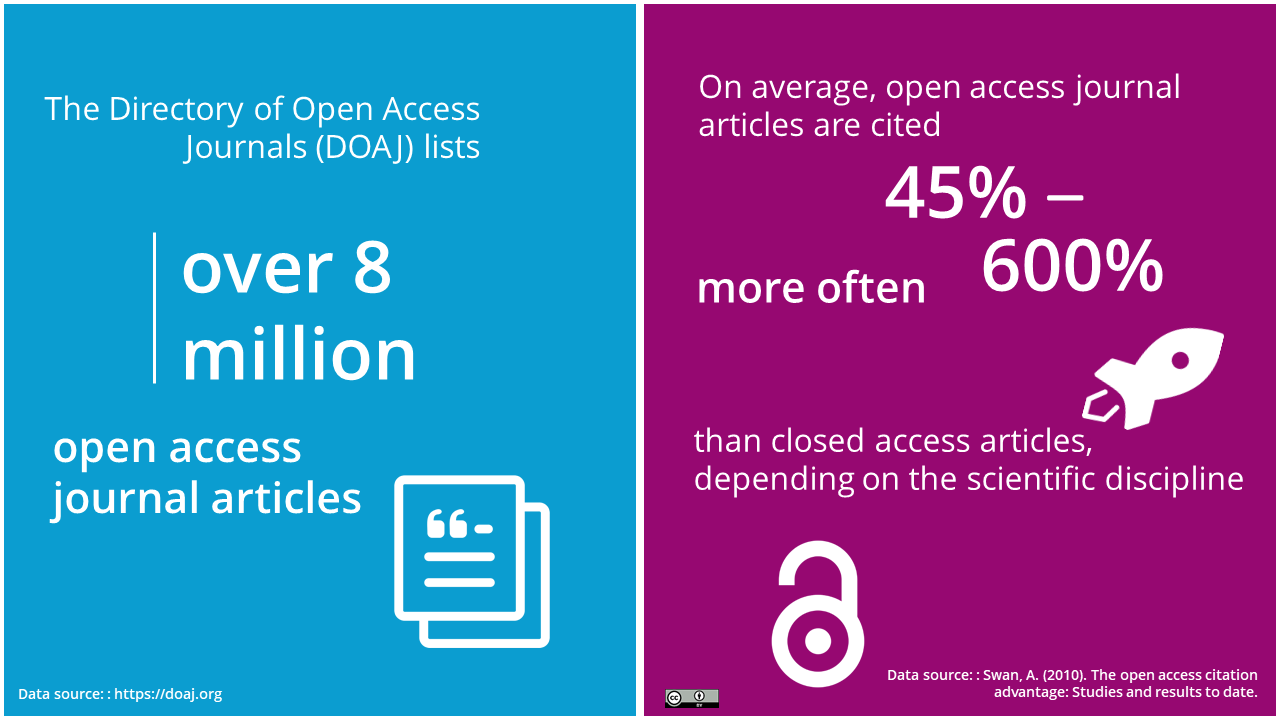
As of December 2025, the Directory of Open Access Journals (DOAJ) listed over 150 journals under “Ethnology. Social and Cultural Anthropology”.
Scholars in the ethnological disciplines publish in subject-specific journals, field-specific journals (e.g. science studies, migration research, gender studies, museum research, urban research), and region-specific journals. The main focus in what follows is on subject-specific journals.
Well-known German-language open access journals include:
- Baessler-Archiv
- Berliner Blätter *
- Bricolage *
- Ethnoscripts *
- Hamburger Journal für Kulturanthropologie *
- Kulturanthropologie Notizen *
- Österreichische Zeitschrift für Volkskunde
- Paideuma
- Schweizerisches Archiv für Volkskunde (Access via the publisher )
- Schweizerische Zeitschrift für Sozial- und Kulturanthropologie
- Zeitschrift für Empirische Kulturwissenschaft
- Zeitschrift für Ethnologie (Journal of Social and Cultural Anthropology)
(* Journals marked with an asterisk publish mainly or exclusively thematic special issues.)
Well-known English-language open access journals include:
- Anthropological Journal of European Cultures doaj
- Cultural Anthropology doaj
- Ethnologia Europaea doaj
- Journal of Ethnology and Folkloristics
- Social Analysis doaj
- Social Anthropology doaj
- Teaching Anthropology
- The Cambridge Journal of Anthropologydoaj
Because of the breadth of publications in the ethnological disciplines and the fact that these disciplines are assigned to the social sciences, the humanities, and the cultural sciences, relevant field-specific and transdisciplinary open access journals can also be added to the list. They include, for example:
- Curare – Zeitschrift für Medizinethnologie *
- Forum Qualitative Sozialforschung doaj
- Journal of Comparative Research in Anthropology and Sociology doaj
- Journal of Legal Anthropology doaj
- kommunikation@gesellschaft
- Movements – Journal für kritische Migrations- und Grenzregimeforschung *
- Mobile Culture Studies * doaj
- Open Gender Journal doaj
- sub\urban – Zeitschrift für kritische Stadtforschung *
- Urbanities – Journal of Urban Ethnography
(* Journals marked with an asterisk publish mainly or exclusively thematic special issues.)
Also worthy of mention is the Journal of Political Ecology, which is in part anthropologically oriented. It has been published open access since 1994 and is thus one of the first and oldest open access journals in the social sciences.
From time to time, several journals are bundled and converted to open access. This is usually done using consortial funding models, where the required funding is jointly provided by many institutions. In 2020, numerous journals published with Berghahn Books were converted to open access by means of the subscribe-to-open variant. The package now comprises 16 journals (besides those already mentioned, they include Anthropology of the Middle East, Focaal, Museum Worlds, and Religion and Society). In 2024, with the support of the Specialised Information Service for Social and Cultural Anthropology (FID SKA) and the Saxon State and University Library Dresden (SLUB), consortial funding for an initial period of 3 years enabled the open access of a bundle of six German-language, scholar-led journals.
Conversions of journals from open access to closed access or the restriction of the open access publishing model are rare, but for various reasons they sometimes happen – usually due to funding problems – also in the case of journals from the ethnological disciplines. Six years after its launch as a purely open access journal, HAU: Journal of Ethnographic Theory, which has already been mentioned above, switched to a publishing model that combines closed access (with a subscription option) and partial open access (temporary for new issues and permanent for selected articles and target groups; see da Col, 2017). The Journal of Religion and Popular Culture and the journal Human Affairs, both of which were open access for a time, were reconverted to closed access (subscription with hybrid publishing model). Furthermore, the discontinuation of journals is common and also affects open access journals, for example Open Anthropology, an open access pilot experiment conducted by the American Anthropological Association from 2013 to 2022, and the Museum Anthropology Review, which was launched in 2007 and discontinued in 2023 (Jackson, 2023).
It should also be mentioned that back issues of numerous journals are freely accessible. Via a digitisation project by the Specialised Information Service for Social and Cultural Anthropology (FID SKA), the back issues of many German-language ethnological journals are freely accessible. The respective time lag relative to the latest issue differs from journal to journal. The journals in question include Anthropos, Baessler-Archiv, Sociologus, Zeitschrift für Volkskunde (predecessor of Zeitschrift für Empirische Kulturwissenschaft) and Zeitschrift für Ethnologie. The archives of the journals Tsantsa (predecessor of Schweizerische Zeitschrift für Sozial- und Kulturanthropologie), Schweizerisches Archiv für Volkskunde, and Österreichische Zeitschrift für Volkskunde are completely freely accessible. So too is the archive of Ethnologia Europaea. Until 2022, all issues of American Anthropologist, the primary journal of the American Anthropological Association, that were over 35 years old were freely accessible. That is no longer the case.
Open access is remarkably widespread among journals in the ethnological disciplines in the Ibero-American region, where open access is generally better established. Spanish-language journals from the ethnological disciplines are almost without exception open access. Well-known publications include AIBR – Revista de Antropología Iberoamericana, Chungara, Etnográfica, Horizontes Antropológicos, Intersecciones en Antropología, and Mana – Estudos de Antropologia Social.
Quelle: Brinken, H. (2020). Finanzierung von Open-Access-Artikeln, open-access.network. https://doi.org/10.5446/49536 (CC BY 3.0 DE)
Video about the Funding of Open Access Articles
Open Access Books
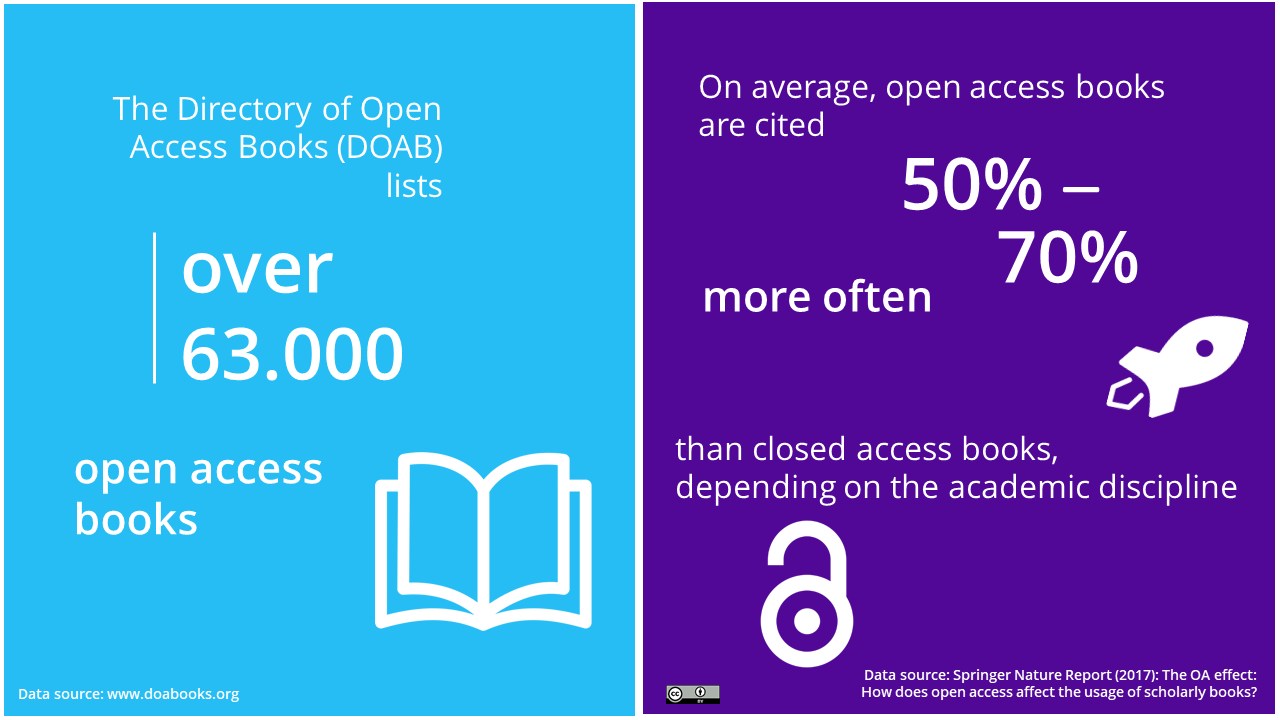
As of December 2025, the Directory of Open Access Books (DOAB) and the OAPEN Library listed several hundred titles from the ethnological disciplines (from fields with the words “anthropology” or “ethnography” in their names).
HAU Books and Open Anthropology Cooperative Pressare two publishers that publish books in the ethnological disciplines exclusively or mainly open access. Other publishers that often publish English- or German-language open access books from the ethnological disciplines include ANU Press, Duke University Press, Mattering Press, Open Humanities Press, Transcript, UCL Press, and University of California Press.
Disciplinary Repositories
Important repositories in the ethnological disciplines include:
- Open Anthropology Research Repository
- Social Science Open Access Repository
- SocArXiv
- Social Sciences Research Network
With the EthnOA repositories for texts and audiovisual media, the Specialised Information Service for Social and Cultural Anthropology (FID SKA) provides a cross-institutional offering for open access publishing and self-archiving. The offering also targets researchers who are not affiliated with an institution or who do not have access to an institutional repository.
Because of the previously mentioned multi-disciplinarity of the field, repositories for specific lines of research are also an option. They include, for example, CrossAsia-Repository for Asia studies, GenderOpen for gender studies, MENAdoc for Middle East and Islamic studies, and OstDok for research on Eastern, Central Eastern, and South-Eastern Europe.
The Open Directory of Open Access Repositories (OpenDOAR) also provides an overview of other possible relevant repositories.
Video über das Zeitveröffentlichungsrecht
Quelle: Brehm, E. (2021). Zweitveröffentlichungsrecht für Wissenschaftler*innen, open-access.network. https://doi.org/10.5446/51789 (CC BY 3.0 DE)
Practical Tip
Finding Open Access Literature (in German)
Other Useful Offerings
EVIFA, which is managed by the Specialised Information Service for Social and Cultural Anthropology (FID SKA), is a central portal for the ethnological disciplines in the German-speaking area where users can, for example, search for and access freely accessible literature. Its holdings include digitised editions of German-language journals and monographs from over 200 years of research. In addition, the FID provides free online access to selected licensed resources.
The Open Encyclopedia of Anthropology (formerly the Cambridge Encyclopedia of Anthropology) is an open access resource in which peer-reviewed introductory articles on subject-specific topics and concepts are published. Until 2024, the Open Folklore portal listed open access resources in the field of folklore studies. As of late 2024, it was undergoing reorganization.
The Anthropology Book Forum, a project of the American Anthropological Association, publishes freely accessible English-language book reviews. Freely accessible research reports, reviews, and news are published via the history portal H-Soz-Kult, also in the category “Ethnology and Historical Anthropology”.
Numerous other freely accessible disciplinary databases and offerings can be found in the “Anthropology” category in the database information system DBIS.
Open Science in the Ethnological Disciplines
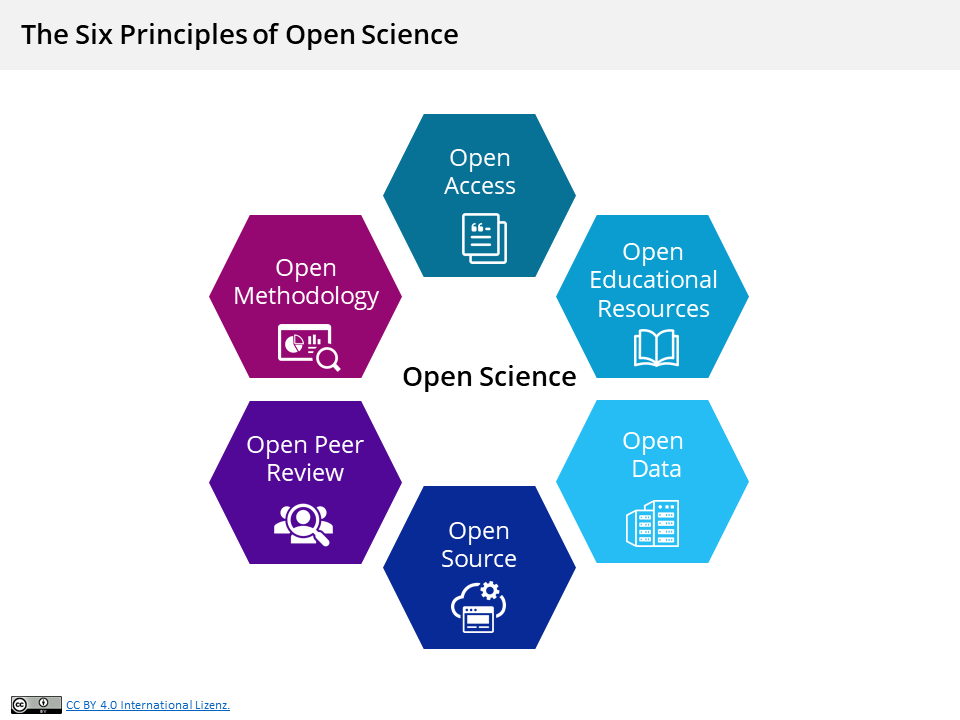
The aspiration of open science to extend the principle of openness to the entire research cycle, from the first idea to the final publication, and thus to make all forms of scholarly knowledge open access, transparent, and reusable, has far-reaching consequences and brings significant challenges for ethnological disciplines and ethnographic research. It is therefore the subject of controversial debate.
This becomes particularly clear in the case of open research data. In light of increasing requirements imposed by research funders, research data management and the archiving and reuse of ethnographic materials in particular have been addressed more intensively in the ethnological disciplines since around 2016. What is problematic for the ethnological disciplines – and for other social sciences – is that the specific characteristics of qualitative data, and especially data from ethnographic research, are not adequately taken into account. Rather, funders’ requirements are based on an understanding of data in the sense of raw data and primary data, as found in particular in the natural science disciplines and quantitatively oriented research areas. In the ethnological disciplines, the term “data” is used in a specific sense: Data are understood as being generated in the social process of field research and as embedded in field relationships. It is therefore not possible – or possible only to a limited extent – to make ethnographic research data, which usually contain sensitive information about persons or groups, openly accessible. Rather, openness must be considered and weighed up in relation to the respective concrete research fields as well as from a research ethics and legal perspective. Relevant aspects and important issues include (a) whether adequate consent has been obtained from individuals in the field, or whether it is even possible to obtain such consent in the first place; (b) whether research data belong to the researchers alone (e.g. in the case of interviews or recordings of conversational situations); and (c) what consequences may arise from this, or how protective measures such as pseudonymisation or anonymisation affect the reusability of ethnographic material. Obligations to provide open access to research data are broadly rejected, especially on legal and ethical grounds, coupled with fears that research, especially in confidential and sensitive contexts, could be made more difficult or even impossible. (On these and other aspects, and on research data management in general, see Imeri 2018, 2019). Several professional associations have published position papers on these issues and on the discipline-specific requirements in dealing with research data and have made their debates transparent in scholarly publications. The Specialised Information Service for Social and Cultural Anthropology (FID SKA) portal EVIFA provides comprehensive information on research data in the ethnological disciplines.
Furthermore, within the framework of the FID SKA, workflows and procedures that enable the archiving and reuse of almost the entire range of ethnographic data have been developed at the data service centre Qualiservice at the University of Bremen (Rizzolli et al., 2024). Qualiservice offers advice for individual researchers as well as for projects, project consortia, and institutions.
DATA AFFAIRS, a platform developed at Collaborative Research Centre 1171 “Affective Societies” at Freie Universität Berlin, invites researchers, teachers, and students to engage in interactive learning on the topic of data management in ethnographic research. Besides texts on individual aspects of data management, it also contains illustrative examples, experience reports, exercises, a glossary, and more.
Open methodology – that is, the disclosure of methods developed or used in the research process – is not in fact new to the ethnological disciplines. As a rule, methods are disclosed and discussed in publications, especially in monographic ethnographies. When doing so, the consequences of the chosen approach for the research process are reflected upon. In this regard, the connection with and the relevance of open access should be stressed. The situation is different in cases where the disclosure of methods is expected to take place before or during the actual research process, and where open methodology in the broader sense is thus also understood as the transparent and open documentation of the steps in the research process. Because of the close links with the research field and the research data, the challenges – and therefore also the complex issues that arise here – are similar to those in the case of open data.
Open source – that is, making source code available in open access – has played hardly any role in the ethnological disciplines to date, as programs and software are seldom developed in these fields of research. However, there are no fundamental arguments against open source. In the case of software used in research in the ethnological disciplines, especially for qualitative data analysis, there is indeed potential for increasing support for the development and use of open source software. This is relevant not least because the functioning of the mostly proprietary software used in these disciplines is a black box, and disclosure of this part of the method is thus not completely possible.
In the case of open evaluation, there is no notable difference between the ethnological disciplines and other fields. Thus, open peer review would be just as possible in the ethnological disciplines as in other disciplines. To date, however, no journals or other publishing models in the ethnological disciplines use open peer review. SOCIOS, which was established in 2024, is an open peer review platform for preprints in the social sciences, and thus also for the ethnological disciplines.
The provision of open and free-of-charge access to teaching materials (open educational resources, OER) is closely linked to the publication of books and journals open access. For example, the introductory textbook Perspectives: An Open Invitation to Cultural Anthropology (2017; 2nd, revised ed. 2020) was published open access.
References
- da Col, G. (2017). Free gifts that must be invented. HAU: Journal of Ethnographic Theory, 7(2), i–vii. https://doi.org/10.14318/hau7.3.001
- Imeri, S. (2018). Order, archive, share. Research data in the ethnological disciplines. Journal for European Ethnology and Cultural Analysis, 3(2), 215–240. https://doi.org/10.18452/20810
- Imeri, S. (2019). ‚Open Data‘ in den ethnologischen Fächern. Möglichkeiten und Grenzen eines Konzepts. In J. Klinger & M. Lühr (Eds.), Forschungsdesign 4.0 - 1 (Vol. 1, pp. 45–59). Institut für Sächsische Geschichte und Volkskunde. https://doi.org/10.25366/2019.07
- Jackson, J. B. (2023). On Museum Anthropology Review (2007–2023). Museum Anthropology Review, 17(1–2), 1–10. https://doi.org/10.14434/mar.v17i1-2.35839
- Rizzolli, M., Imeri, S., & Huber, E. (2024): Ethnografische Forschungsmaterialien zur Archivierung und Nachnutzung vorbereiten und dokumentieren – ein Überblick für Forschende (Qualiservice Working Papers 6-2024). https://doi.org/10.26092/elib/2723
Further Reading
- Jackson, J. B., & Anderson, R. (2014). Anthropology and open access. Cultural Anthropology, 29(2), 236–263. https://doi.org/10.14506/ca29.2.04
- Kelty, C. M., Fischer, M. M. J., Golub, A., Jackson, J. B., Christen, K., Brown, M. F., & Boellstorff, T. (2008). Anthropology of/in circulation. The future of open access and scholarly societies. Cultural Anthropology, 23(3), 559–588. https://doi.org/10.1111/j.1548-1360.2008.00018.x
- Miller, D. (2012). Open access, scholarship, and digital anthropology. HAU: Journal of Ethnographic Theory, 2(1), 385–411. https://doi.org/10.14318/hau2.1.016
- Zeitlyn, D., Corsín Jimenez, A., Willinsky, J., Waterston, A., Tritton, R., Kelty, C. M., Ardevol, E., Jemielnak, D., Sanchez-Criado, T., Abadal, E., Gatti, R., García, B., Rasero, V., Nugent, S., Gideon, J., Aibar, E., Malo de Molina, T., & Rodríguez Lópes, J. (2014). Preguntas frecuentes sobre acceso abierto - La economía política en torno a las publicaciones en antropología y otras ciencias sociales. FAQs about open access – The political economy of publishing in anthropology and beyond (A. Montoya, M. Pérez, G. Dallemagne, & V. del Arco, Eds.). https://openaccessmadrid2014.wordpress.com/wp-content/uploads/2014/10/faqs-about-open-access_preguntas-frecuentes-sobre-acceso-abierto.pdf
- Zeitschrift für Empirische Kulturwissenschaft, 118(1/2), 2022 (with a forum on open access)
Content editors of this page: Kathleen Heft (Humboldt-Universität zu Berlin, University Library/Specialised Information Service for Social and Cultural Anthropology), Marc Lange(Helmholtz Open Science Office)
The authors thank Sabine Imeri for comments on the section on open research data.
Last updated: December 2025