
Video zur Finanzierung von Open-Access-Artikeln
Quelle: Brinken, H. (2020). Finanzierung von Open-Access-Artikeln, open-access.network. https://doi.org/10.5446/49536 (CC BY 3.0 DE)
Open Access in Gender Studies
Gender studies is a field of knowledge that is strongly characterised by inter- or transdisciplinary work methods and in which a variety of disciplinary approaches can be found. In many cases, the publishing practices and venues of gender researchers depend on the specialist disciplines involved and are correspondingly heterogeneous. However, there are also several publications with a decidedly inter- or transdisciplinary focus. For the most part, gender researchers publish their works in journals, edited volumes, and monographs. In addition, handbooks, science blogs, and various other transfer formats are widespread. Preprints, by contrast, play hardly any role at all.
Opportunities for Gender Studies
Open access publishing offers enormous opportunities, especially for gender studies. Because of political reservations with regard to gender studies, and the ambiguous location of the field between the disciplines, its results are subjected to reception barriers. The potentially greater visibility and the direct access to full texts enables open access publications to overcome these barriers and thus demonstrate their quality.
The opportunities offered by electronic publishing, and especially by open access, are now widely acknowledged in gender studies. There are now several open access publications In German-language gender studies, in particular journals and science blogs. There has also been a gradual increase in the number of publications in the area of open access books. Internationally, two developments can be distinguished: On the one hand, relevant, mainly English-language publications on gender studies are being published with large commercial publishers, which, to date, unfortunately offer only hybrid open access options against payment of publication charges. On the other hand, there are a growing number of open access publications in the non-English-speaking world that use no-fee and scholar-led open access models, thereby making an important contribution to bibliodiversity.
Activities of the German Gender Studies Association
The German Gender Studies Association (Fachgesellschaft Geschlechterstudien) actively supports open access publishing. As one of the four editors of the Open Gender Journal, and as the provider of the Open Gender Platform, the association has anchored open access as an important field of activity in its task spectrum. In addition, within the association, the working group Open Digital Gender connects existing initiatives and engages with current developments in the areas of open access and open science.
Open Access Journals
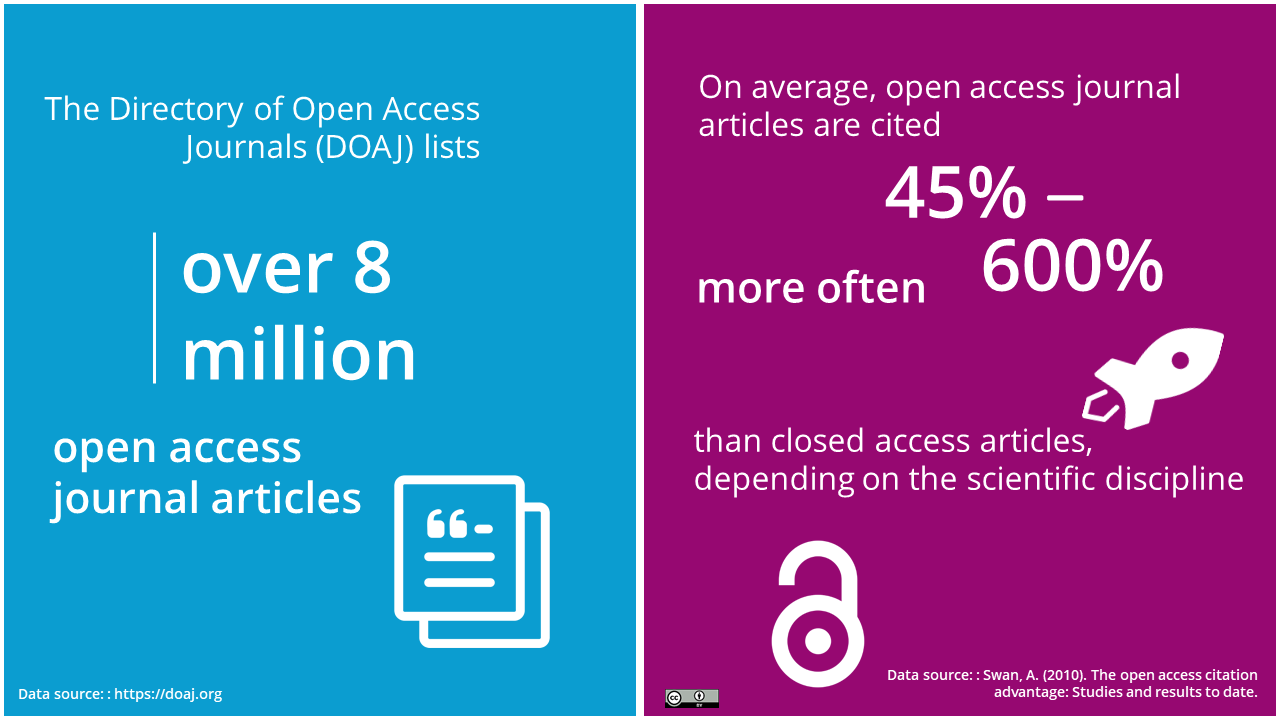
As of August 2024, the Directory of Open Access Journals (DOAJ) listed 159 entries under the keyword gender. Only 34 of the journals listed in the DOAJ levy article processing charges (APCs).
In Germany, the following open access journals and working paper series are published in the area of gender studies:
- Open Gender Journal DOAJ
- querelles-net (since 2020 a section of the Open Gender Journal)
- GENDER FORUM – An Internet Journal for Gender Studies DOAJ
- IZGOnZeit
- gender[ed]thoughts
- FKW // Zeitschrift für Geschlechterforschung und visuelle Kultur
Since 2020, the review journal querelles-net, one of the pioneers of the open access movement in German-speaking gender studies, has been integrated as a section in the Open Gender Journal. The aforementioned journals are not only accessible free of charge, they also fulfil the requirements for open access publications by using open licences.
Open Access Handbooks
The handbook “Politik und Geschlecht” [Politics and Gender] (edited by Christine M. Klapeer, Johanna Leinius, Franziska Martinsen, Heike Mauer, and Inga Nüthen), the first edition of which was published in 2017, is an open access introductory work to gender studies that is continuously supplemented and updated. This “living encyclopaedia” was created within the framework of the BMBF-funded project OAPEnz as a collaboration between ZB MED – Information Centre for Life Sciences and the publisher Barbara Budrich.
Open Access Science Blogs
In addition to classical scholarly journals, there are also several open access gender studies science blogs. The posts in the blog interdisziplinäre geschlechterforschung, an interdisciplinary gender studies blog published by the Koordinations- und Forschungsstelle Netzwerk Frauen- und Geschlechterforschung NRW (Coordination and Research Office of the Women’s and Gender Research Network of the state of North Rhine-Westphalia), are preserved long-term in the repository of the Library of the University of Duisburg-Essen. The Genderblog of the Center for Transdisciplinary Gender Studies at Humboldt-Universität zu Berlin focuses on the publication of findings, projects, and debates from gender studies research and teaching at the university.
Open Educational Resources
In the area of Open Educational Resources (OER), the OER “Was ist Gender?” [What is gender?] provides an introduction to the topic. The portal Gendering MINT digital makes reusable teaching modules from the area of research and teaching “Gender & STEM” available as OER. The Toolbox Gender und Diversity in der Lehre offers materials for designing discrimination-critical university teaching. All offerings are available under an open licence.
Video über das Zeitveröffentlichungsrecht
Quelle: Brehm, E. (2021). Zweitveröffentlichungsrecht für Wissenschaftler*innen, open-access.network. https://doi.org/10.5446/51789 (CC BY 3.0 DE)
Disciplinary Repositories
With GenderOpen, which was established in 2018, gender studies has a disciplinary open access repository that ensures the long-term availability of publications under open access conditions. The repository also informs authors about their rights in the areas of self-archiving and the secondary publication right (Zweitveröffentlichungsrecht), thereby creating an awareness of the possibilities granted to them under German copyright law. In many cases, targeted collaborations with relevant scholarly publishers enable the self-archiving of the original publisher’s version and the corresponding metadata after expiry of an embargo period.
Furthermore, there are collaborations between the GenderOpen repository and the publishers Barbara Budrich and De Gruyter, on the basis of which the original publisher’s version of electronic full texts of articles from certain journals and the corresponding metadata may be made freely available after the expiry of an embargo period. Authors have the possibility of deciding at the time of publication that their contributions are to be made available under a Creative Commons (CC) licence after this embargo period. GenderOpen then releases the contributions automatically. This applies to the following journals:
- FZG – Freiburger Zeitschrift für GeschlechterStudien (embargo: 24 months)
- FEMINA POLITICA – Zeitschrift für feministische Politikwissenschaft (embargo: 36 months)
- Feministische Studien (embargo: 24 months)
The GenderOpen keyword index, Schlagwortindex GenderOpen, is a controlled vocabulary for the substantive description of gender studies publications. Developed within the framework of GenderOpen, it is also used by several journals, the Digital German Women’s Archive (Digitales Deutsches Frauenarchiv, DDF), and the Gutachter*innen-Datenbank, a reviewers database. In 2019, GenderOpen received the DINI Certificate for Open Access Publication Services. An overview of relevant repositories is also provided by the Open Directory of Open Access Repositories (OpenDOAR).
The online archives JSTOR and Project MUSE now also provide open access content relevant to gender studies.
Other Offerings
Open access in German-language gender studies has been decisively advanced by individual projects. A groundbreaking role in this regard was played by the project Geschlechterforschung und Open Access. Ein Publikationsmodell für ein inter-/transdisziplinäres Forschungsfeld (Gender Studies and Open Access. A Publication Model for an Inter-/Transdisciplinary Research Field), which was funded by the German Research Foundation (DFG) and conducted at the Freie Universität Berlin (2011–2012). The project analysed the opportunities and challenges for open access publications in gender studies and showed that all the necessary technical and legal possibilities for implementing quality-assured open access publications exist. However, open access publications and electronic publication processes entail additional challenges, for example, clear divisions of roles, clarification of rights, and adaptation to transdisciplinary and cross-national standards.
Another open access offering is the Open Gender Platform, which was developed and built at the Freie Universität Berlin‘s Margherita von Brentano Center within the framework of a project (June 2018–September 2020) funded by the German Federal Ministry of Education and Research. The project developed sustainable approaches for editorial workflows, business models, and quality assurance procedures and made them available to the entire field of gender studies for reuse. Deliverables included a reviewers database (Gutachter*innen-Datenbank) – that is, a directory of experts who have declared their willingness to act as reviewers for open access journals and books in Germany.
Furthermore, there are collaborations between the GenderOpen repository and the publishers Barbara Budrich and De Gruyter, on the basis of which the original publisher’s version of electronic full texts of articles from certain journals and the corresponding metadata may be made freely available after the expiry of an embargo period. Authors have the possibility of deciding at the time of publication that their contributions are to be made available under a Creative Commons (CC) licence after this embargo period. GenderOpen then releases the contributions automatically. This applies to the following journals:
- GENDER – Journal for Gender, Culture and Society (24-month embargo)
- FZG – Freiburger Zeitschrift für GeschlchterStudien (24-month embargo)
- FEMINA POLITICA – Zeitschrift für feministische Politikwissenschaft (36-month embargo)
- Feministische Studien (24-month embargo)
The online archives JSTOR and Project MUSE now also provide open access content relevant to gender studies.
Practical Tip
Open Science in Gender Studies
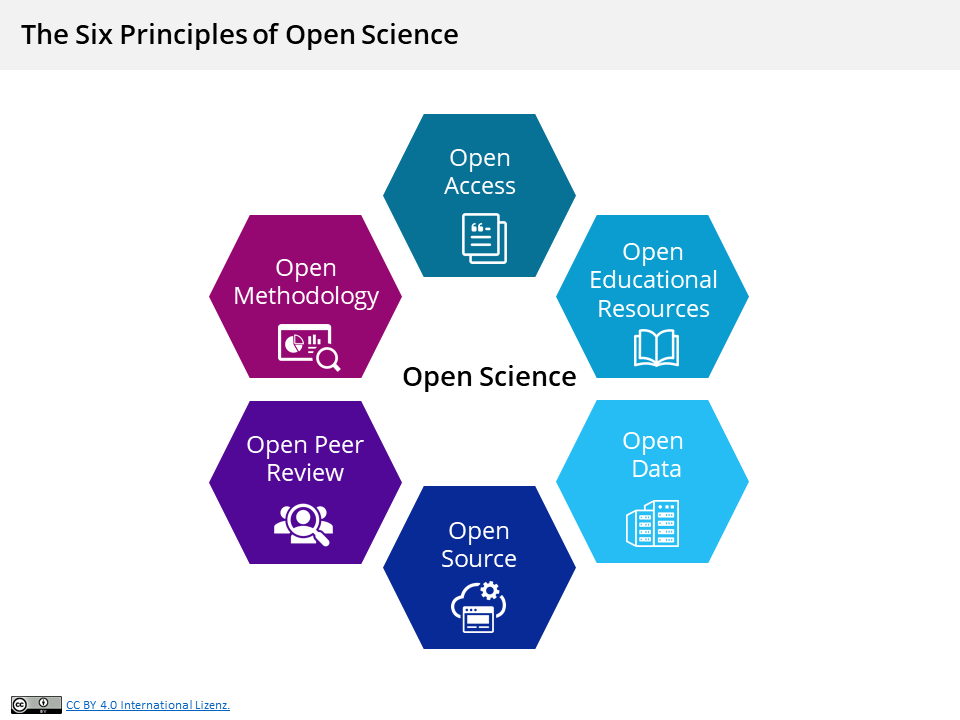
The topic of open research data is being taken up only hesitantly in gender studies. According to a needs analysis on research data infrastructure in gender studies, only a few researchers have experience of the reuse of research data. The difficulties in disciplinarily classifying gender studies repeat themselves also in relation to open research data. To date, there are no explicitly designated research repositories for gender studies. Even when metadata have been properly recorded, a search always requires the use of various search strategies with different storage locations, keywords, and disciplines. However, whether an independent storage location for open research data is called for in an inter- and transdisciplinary field such as gender studies, in which researchers work with diverse types of data, has not yet been conclusively settled.
Content editor of this page: Kathrin Ganz (Last updated: August 2024)