
Open Access in Historical Studies
Historians are generally well disposed towards all forms of open access.
The number of open access journals and digital collections in historical studies is steadily growing. In the case of monographs and edited collections, however, open access is progressing more slowly. Blogs are another form of publication used to disseminate scholarly information in this field.
Besides publications, freely available historical sources, especially in the form of digital reproductions and machine-readable digital editions, are of great importance in historical studies. In addition, in the areas of digital humanities of relevance to historical studies, open access tools (e.g. for text mining) also play a role.
Open Access Journals
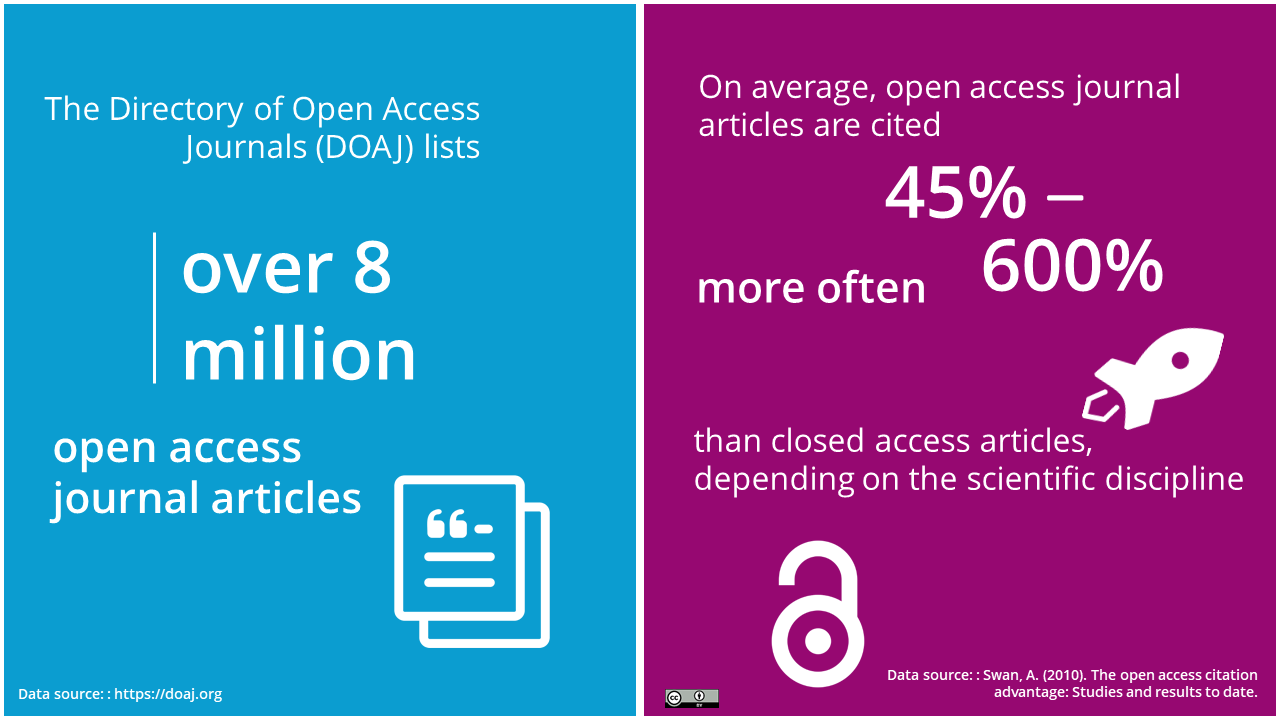
As of December 2025, the Directory of Open Access Journals (DOAJ) listed 1,582 open access journals under “History”.
Important open access journals in historical studies include:
- Historische Zeitschrift (https://doaj.org/toc/2196-680X)
- Jahrbuch für Wirtschaftsgeschichte (https://doaj.org/toc/2196-6842)
- Zeithistorische Forschungen (https://doaj.org/toc/1612-6041)
- Zeitschrift für digitale Geisteswissenschaften (https://doaj.org/toc/2510-1358)
- Zeitschrift für Historische Forschung. Beihefte
- Zeitschrift für Ostmitteleuropa-Forschung (https://doaj.org/toc/2701-0449)
Reviews also play an important role in historical studies. Many journals that are not open access nonetheless make their review sections freely available. Furthermore, there are a number of open access review platforms:
- Francia-Recensio (review journal of the German Historical Institute Paris)
- recensio.net (platform for reviews from journals in historical studies from all over Europe)
- recensio.regio (platform for reviews from historical journals with a regional focus)
- RIDE (review journal dedicated to digital editions and resources)
- sehepunkte (review journal)
Source: Brinken, H. (2020). Finanzierung von Open-Access-Artikeln, open-access.network. https://doi.org/10.5446/49536 (CC BY 3.0 DE)
Open Access Books
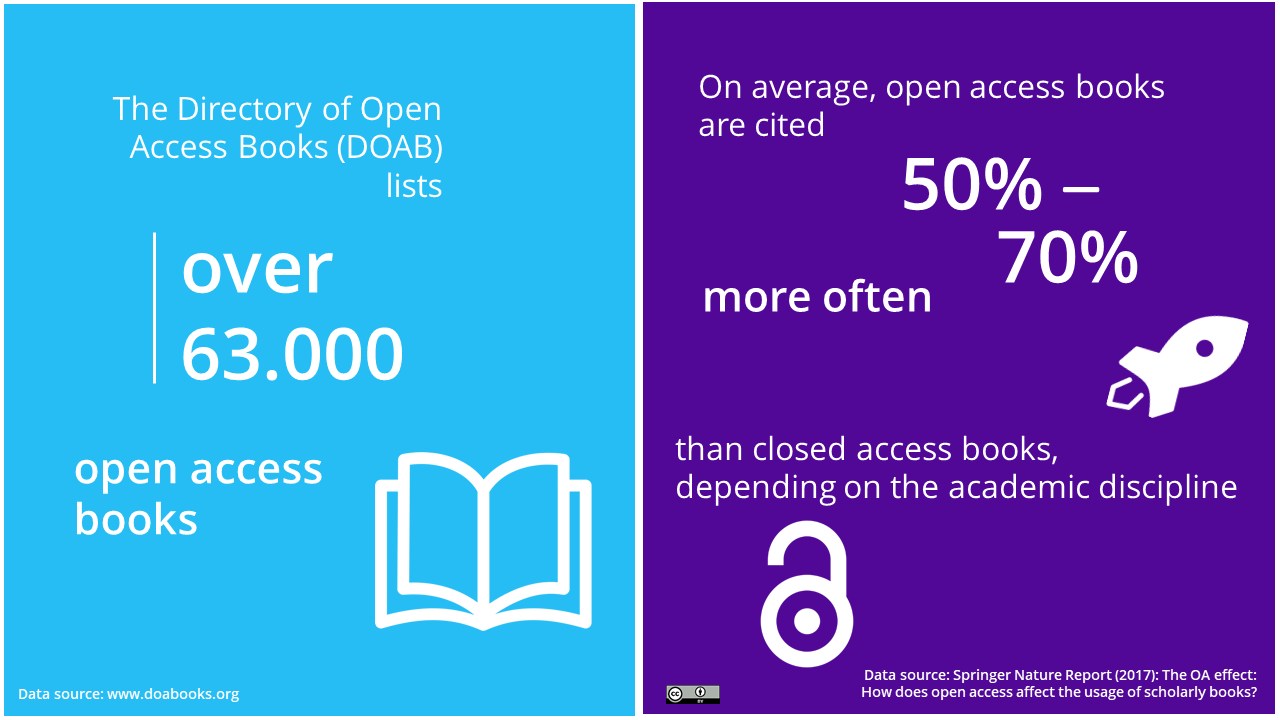
As of December 2025, the Directory of Open Access Books (DOAB) listed 2,773 monographs and edited collections under “History”. The OAPEN Online Library also provides open access full texts on historical topics. As of December 2025, the publication platform OpenEdition provided 5,203 open access books under “History”.
Overall, there are a great variety of publishing models, whose conditions, costs, and technical implementation vary greatly.
The German-language university presses in the consortium AG Universitätsverlage strongly support the open access movement, and many of them publish monographs and edited collections from the humanities.
Within the framework of the open access transformation, scholarly publishers, for example Barbara Budrich, de Gruyter, transcript, Wachholtz, and Wallstein, increasingly offer authors – also from historical studies – the option of publishing their works open access.
In the meantime, there are a number of open access publishers in the humanities that publish works exclusively in open access and do not levy book processing charges (BPCs). They include, for example, Language Science Press and Edition Topoi.
The Edition Open Sources, which is hosted by the Max Planck Institute for the History of Science (MPIWG), makes academic editions of primary sources available in open access.
Stand-alone publications funded by the Austrian Science Fund (FWF), including publications on historical topics, are made available in open access in the FWF-E-Book-Library.
In the series Historisches Forum, themed issues with contributions and reports from historical studies are published in collaboration with Clio-online and Humboldt-Universität zu Berlin.
Disciplinary Repositories
As of December 2025, the Directory of Open Access Repositories (OpenDOAR) listed 26 repositories under “History”, and the Registry of Research Data Repositories re3data.org listed 141 research data repositories with historical content. In addition, content and publishing opportunities of relevance to historical studies can be found in repositories, databases, and other reference systems of neighbouring disciplines.
An important role in the provision of content is played by the Specialised Information Service (FID) for Historical Studies – historicum.net. The FID offers publishing, archiving, and search services.
Other specialised information services also offer historians significant added value. Because of the multi-perspectivity of the field, diverse historical studies content can be found in numerous sub-disciplines. This content can be found in the respective disciplinary repositories by using appropriate search filters (e.g. “history”). Furthermore, many specialised information services offer advice on and services for open access publishing.
Source: Brehm, E. (2021). Zweitveröffentlichungsrecht für Wissenschaftler*innen, open-access.network. https://doi.org/10.5446/51789 (CC BY 3.0 DE)
Practical Tip
Finding Open Access Literature (in German)
Other Offerings
Blogs
In addition to the many stand-alone historical blogs by research institutions, associations, and individual researchers, there is a central platform for humanities and social science blogs, Hypotheses. Run by the open access service provider Open Edition, Hypotheses hosts several thousand blogs, including blogs on topics related to historical, archival, and auxiliary studies. As of December 2025, some 315 blogs from the German-speaking area were listed under “History & Archaeology”. Redaktionsblog, the blog by the editorial team of the German-language Hypotheses portal, de.hypotheses.org, serves to develop and disseminate scholarly information and to create a network.
Subject Portals and Platforms
Subject portals provide central points of entry for searches for open access publications, historical sources, and other materials.
- Clio-online is a subject portal for historical studies. It is involved in numerous projects, including Zeitgeschichte online – a subject portal for contemporary historians – and H-Soz-Kult. Clio-online publishes a series of German-language handbooks, Clio Guides, for a diverse range of historical studies specializations (covering digital methods and techniques, epochs, collections, and topics). The Clio Guides provide detailed guidance on relevant information resources, media, and search options.
- European History Online, which is provided by the Leibniz Institute of European History (IEG), publishes scholarly contributions on European history between 1450 and 1950. The contributions in German and English are linked to various materials.
- historicum.net, the Specialised Information Service for Historical Studies, provides a wide range of historical information and in particular the German Historical Bibliography.
- H-Net - Humanities and Social Sciences online is a network for academic communication in the humanities and social sciences.
- H-Soz-Kult, a moderated information and communication platform for historians, publishes academic news and alerts users to new releases.
Databases
Access to digitised resources (archivalia, library and museum collections) is essential for historical research. Key databases for historical studies are often operated by individual institutions that are crucial to the discipline or are merged in inter-institutional databases.
- Arachne is the central object database of the German Archaeological Institute (DAO) and the Archaeological Institute of the University of Cologne at Cologne Digital Archaeology Laboratory (Arbeitsstelle für Digitale Archäologie).
- Archives Portal Europa provides inter alia 285 million individual documents from over 7,000 cultural institutions, sometimes with links to digital objects.
- The Deutsche Biographie provides information on over one million persons from the German-speaking area from the early Middle Ages to the present day.
- The Deutsche Digitale Bibliothek (German Digital Library) lists and links over 26 million objects from German cultural institutions (archives, libraries, museums).
- e-codices - Virtual Manuscript Library of Switzerland has set itself the goal of providing free access to all medieval manuscripts and a selection of modern manuscripts of Switzerland via a virtual library.
- On the portal e-rara.ch, digitised printed works from the 15th to the 20th century from various Swiss libraries are made publicly available free of charge.
- Europeana aggregates over 60 million objects (images, text materials, sound and video recordings, and 3D objects) from over 2,000 European cultural organisations.
- The Handschriftenportal (Manuscript Portal) serves as a central reference for the manuscripts in German collections, which it links to indexing data and digital reproductions.
- perspectivia.net, the publication platform of the Max Weber Foundation – German Humanities Institutes Abroad, provides free access to the full texts of journals, reviews, monographs, and conference proceedings (digital publications and retrodigitised works).
- The Regesta Imperii (RI) record in the form of German-language regesta (abstracts) all activities of the Roman-German kings and emperors from the Carolingians to Maximilian I (ca. 751–1519) and the popes in the early and high Middle Ages that are evidenced by charters or other historical sources. The RI project provides RI Opac – a freely accessible literature database for medieval research in the entire European language area – a regesta database, and publications.
- The Wörterbuch-Netz, a project of the Trier Center for Digital Humanities (Kompetenzzentrum für elektronische Erschließungs- und Publikationsverfahren in den Geisteswissenschaften) at the University of Trier, provides inter alia dictionaries of the older historical stages of the German language.
Open Science in Historical Studies
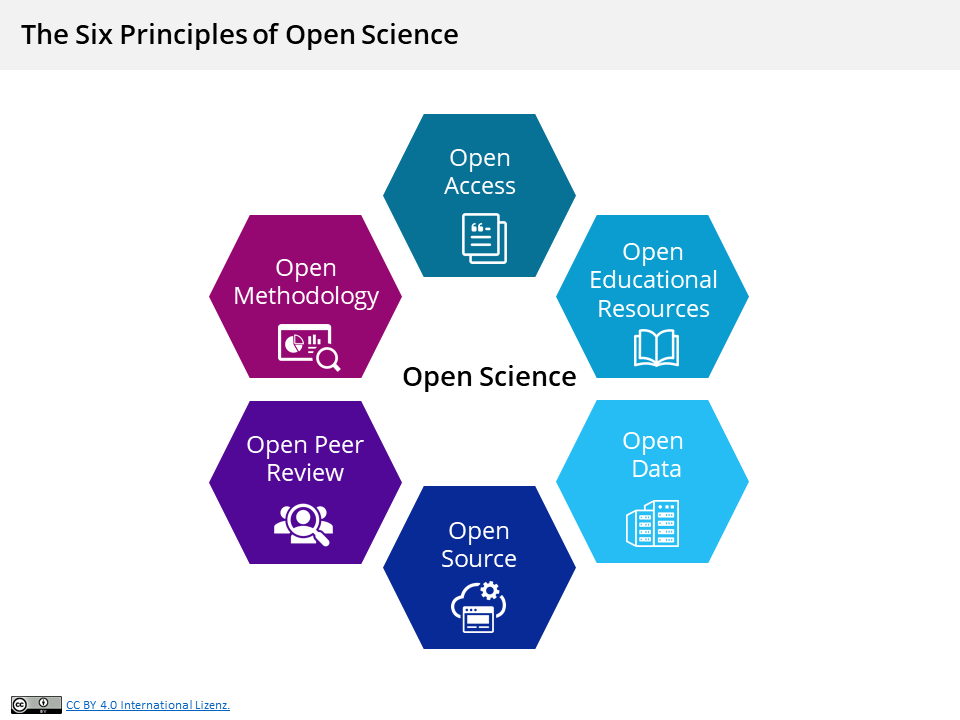
Across the wide spectrum of historical studies, key elements of open science exist in the form of digital sources, machine-readable editions, the use of open access tools for innovative digital research, and the publication of research results in open access. The Digital Historical Studies Working Group (Arbeitsgemeinschaft Digitale Geschichtswissenschaft) within the Verband der Historiker und Historikerinnen Deutschlands e. V. (Association of German Historians, VHD) focuses on the potential of the digital humanities – or e-humanities – for historical studies and offers a forum for exchange with neighbouring disciplines working in history.
Established in 2023, NFDI4Memory is a consortium within the German National Research Infrastructure, NFDI, for humanities disciplines working in history. It is led by the Leibniz Institute for European History (IEG) and also comprises 10 other co-applicants (including the VHD). The consortium promotes the quality-assured, standardised, and competent use of research data in the historical disciplines.
The EU-funded project Social Sciences & Humanities Open Cloud (SSHOC) is an online market place that makes digital tools, services, training materials, and datasets in the social sciences and humanities freely available with the aim of promoting interdisciplinary research and collaboration in these disciplines.
The European research infrastructure OPERAS promotes open scholarly communication in the social sciences and humanities in the European Research Area. OPERAS supports open science inter alia through projects such as TRIPLE (Transforming Research through Innovative Practices for Linked Interdisciplinary Exploration), which is dedicated to developing a multilingual and multicultural discovery service for the social sciences and humanities.
Practical Tip
The legal opinion by Klimpel and Rack (2023, new edition of the 2015 version) explains how and under what conditions audiovisual materials may be used in research and teaching.
Further Reading
- Daniel, S., Enderle, W., Hohls, R., Meyer, T., Prellwitz, J., Prinz, C., Schuhmann, A., & Schwandt, S. (Eds.). (2023–2025). Clio Guide. Ein Handbuch zu digitalen Ressourcen für die Geschichtswissenschaften (3rd expanded and updated edition). Clio-online. https://guides.clio-online.de/