
Open Access in Linguistics
The topic of Open Access has been receiving increasing amounts of attention in linguistics since around 2012. Two particularly significant events that played a role in this were the founding of Language Science Press by German linguists Stefan Müller and Martin Haspelmath in 2014 and the emergence of the journal Glossa, catalysed by a conflict between the editorial board of the journal Lingua and its publisher, Elsevier, in 2016. The eLanguage platform of the Linguistic Society of America, founded in 2006 by Stephen R. Anderson and Dieter Stein, is an important precursor to these two initiatives. Unfortunately, this platform is no longer active, although several journals that used to be part of eLanguage – such as Semantics & Pragmatics, Dialogue & Discourse and Journal of Historical Syntax – continue to enjoy a flourishing existence.
All three of these journals are scholar-led initiatives. Established publishers are reacting to these developments, slowly but inexorably. Zeitschrift für Sprachwissenschaft – the journal of the German Linguistic Society (DGfS) – has been open access since 2017. From 2025, it will be available in diamond open access from PubliKon at the University of Konstanz.
Open Access Journals
As of November 2024, the Directory of Open Access Journals (DOAJ) listed 906 indexed journals under “linguistics”, most of which are diamond open access – that is, they do not charge fees to either authors or readers. A further list of open access linguistics journals can be found in the oaling blog.
Important open access linguistics journals include:
- Constructions
- Glossa DOAJ
- Glossa Psycholinguistics
- Semantics & Pragmatics DOAJ
- Linguistik Online DOAJ
- Zeitschrift für Sprachwissenschaft DOAJ
- Biolinguistics DOAJ
- Open Linguistics DOAJ
- Dialogue & Discourse DOAJ
- Journal of Historical Syntax DOAJ
- Syntactic Theory and Research
In addition, there are many journals dedicated to the linguistic investigation of particular languages or language families, such as Studies in African Linguistics, Finno-Ugric Languages and Linguistics, Indo-European Linguistics, and Isogloss.
Video zur Finanzierung von Open-Access-Artikeln
Quelle: Brinken, H. (2020). Finanzierung von Open-Access-Artikeln, open-access.network. https://doi.org/10.5446/49536 (CC BY 3.0 DE)
Open Access Books
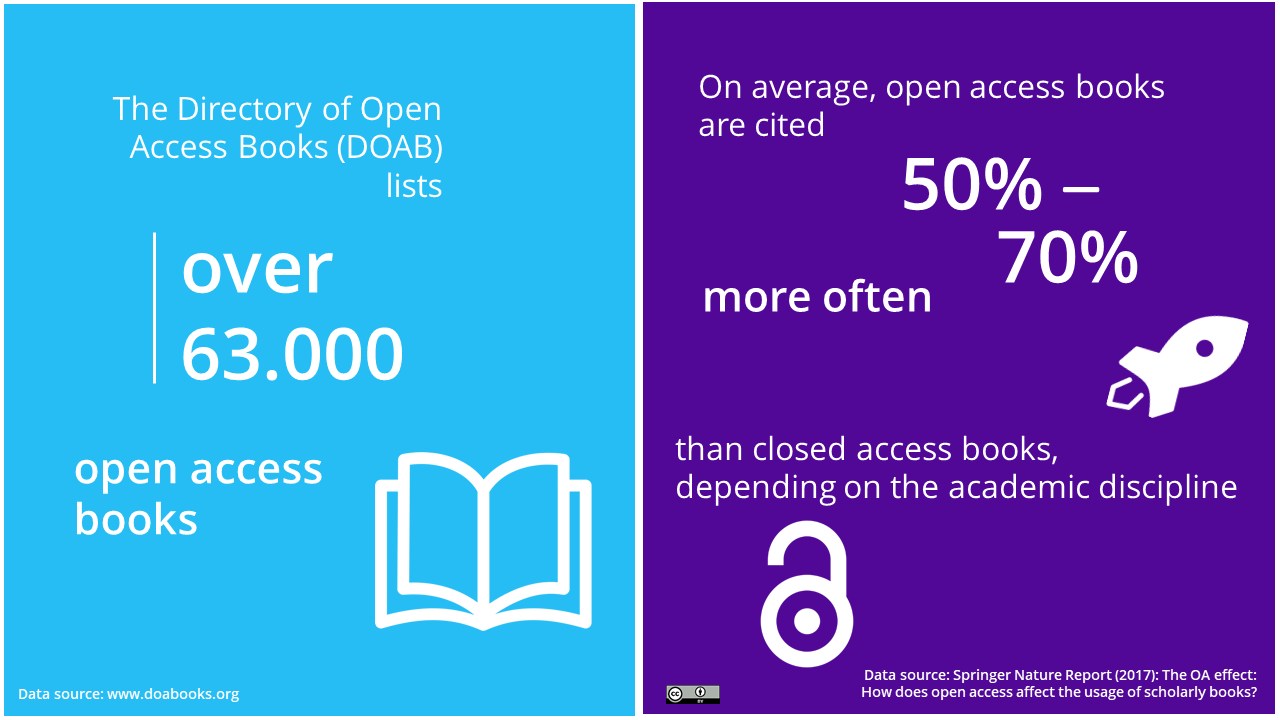
As of November 2024, the Directory of Open Access Books (DOAB) listed 4,282 titles under “linguistics”, and the online library OAPEN listed 16,187 titles under “linguistics”.
The key player in the landscape of open access books in linguistics is Language Science Press, a publisher whose costs are borne primarily by a consortium of university libraries. This enables them to avoid charging book processing charges (BPCs) entirely. However, in addition, virtually all presses that regularly publish linguistics books now offer the opportunity to publish open access upon payment of a BPC.
It is increasingly common for monographs and edited volumes to be published in open access. As regards handbooks, MIT Press publishes a series of Open Handbooks in Linguistics. Open access textbooks, too, are becoming increasingly common.
Disciplinary Repositories
The most important repositories in linguistics include LingBuzz (for general linguistics) and semanticsarchive.net (for the core areas semantics and pragmatics). Depending on authors’ disciplinary identities, linguistics papers can sometimes also be found at Humanities Commons (CORE) or arXiv.org.
The Open Directory of Open Access Repositories (OpenDOAR) also provides an overview of relevant repositories.
Video über das Zeitveröffentlichungsrecht
Quelle: Brehm, E. (2021). Zweitveröffentlichungsrecht für Wissenschaftler*innen, open-access.network. https://doi.org/10.5446/51789 (CC BY 3.0 DE)
Practical Tip
Finding Open Access Literature (in German)
Other Offerings
The oaling blog provides a list of open access journals as well as a roundup of developments in the area of open access in linguistics.
LingOA (Linguistics in Open Access) functions as an umbrella organisation for open access journals; its aim is to transform established subscription-based journals to open access.
Open access book reviews are regularly published on Linguist List.
Open Science in Linguistics
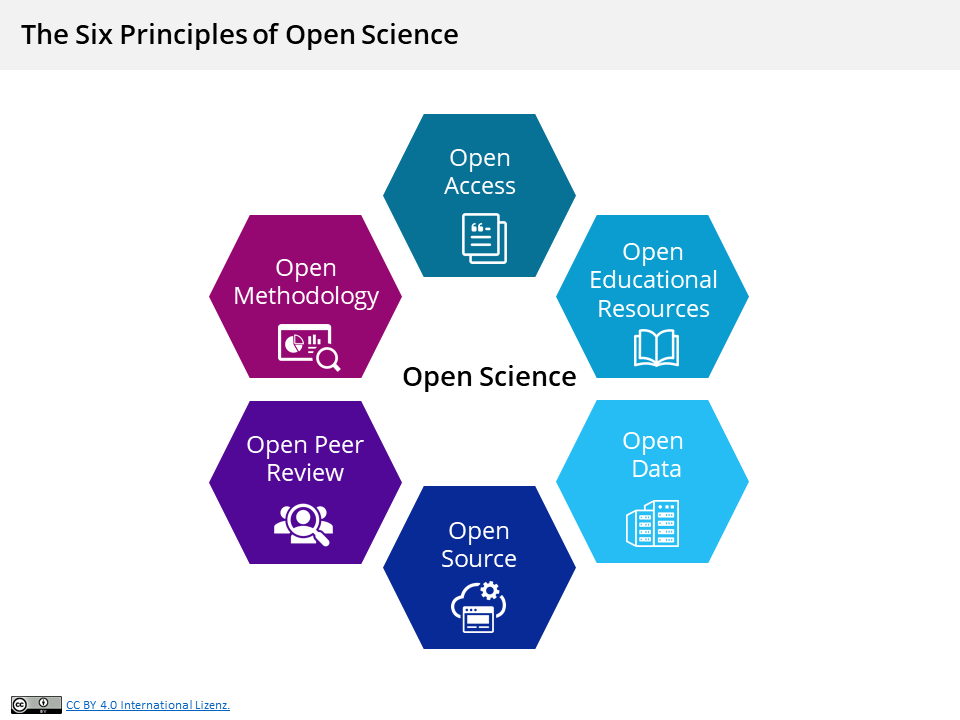
Linguistics researchers work with different types of data, from experimental findings to text corpora. Here, the principles of openness and transparency have become increasingly important in recent years. Berez-Kroeker et al. (2022) published an Open Handbook of Linguistic Data Management. Linguistic research data and software can be deposited in the Tromsø Repository of Language and Linguistics (TROLLing).
Access to text and language corpora plays a significant role in linguistics – especially in corpus and computational linguistics. The dominant way in which corpora are provided is to set up a web-based query option (either freely accessible, usable free of charge after registration, or not freely accessible). This makes optimal use of the structure and annotation of the corpora and requires neither download nor software installation. However, as a rule, the corpora and tools themselves cannot be downloaded and reused for further dissemination or analysis. This is often due to copyright reasons.
Examples include the COSMAS corpora of the IDS (Institute for the German Language) in Mannheim, Varitext (French, University of Cologne), and the DWDS (Digital Dictionary of the German Language), where a core corpus (Kerncorpus) can be freely downloaded. By contrast, LAUDATIO (Humboldt Universität Berlin), which focuses on corpora of historical language stages, practises an open access model. The European initiative LRE Map covers a large number of linguistic resources (data, tools, guidelines). In linguistics, the open source idea plays an increasingly important role insofar as some tools are offered under open licences, and the standardisation and interoperability of data are taken into account.
Open Text Collections, an initiative funded by the German Research Foundation (DFG), aims to make text collections for descriptive linguistics available in a sustainable and open way.
References
- Berez-Kroeker, A. L., McDonnell, B., Koller, E., & Collister, L. B. (2022). The Open Handbook of Linguistic Data Management. The MIT Press.
Further Reading
- Haspelmath, M. (2013). Why open-access publication should be nonprofit – a view from the field of theoretical language science. Frontiers in Behavioral Neuroscience, 7(57). https://doi.org/10.3389/fnbeh.2013.00057
- Kleineberg, M., & Kaden, B. (2017). Open Humanities? ExpertInnenmeinungen über Open Access in den Geisteswissenschaften. LIBREAS. Library Ideas, 32. https://libreas.eu/ausgabe32/kleineberg/
- Müller, S. (2012). A personal note on open access in linguistics. Journal of Language Modelling, 0(1), 9–39. https://doi.org/10.15398/jlm.v0i1.52
Content editors of this page: Prof. Dr. George Walkden (Universität Konstanz) and Prof. Dr. Christof Schöch (Universität Trier) (Last updated: November 2024)