
Open Access in Middle Eastern, North African and Islamic Studies
Middle Eastern, North African and Islamic Studies – also known as sciences relating to the MENA region (the Middle East and North Africa), and formerly known as Oriental studies – comprise a range of disciplines with a philological, cultural studies, religious studies, and area studies orientation (e.g., Arabic studies, Islamic studies, Iranian studies, Turkology). These disciplines, together with other "small disciplines", belong to the subject group "Non-European Language, Literature and Cultural Studies". At individual universities there are also departments that focus on the politics, economies or societies of the MENA region.
While inter- and transdisciplinary work is a key feature of many disciplinary cultures, the orientation of the respective disciplines varies depending on their location and facilities. This variety is reflected in a heterogeneous publishing landscape. As is the norm for humanities and social science disciplines, works are published predominantly in journals and books with either a thematic, regional or chronological orientation. In addition, there are more generalist periodicals of national and international scholarly societies (e.g., the Zeitschrift der Deutschen Morgenländischen Gesellschaft ZDMG, which has a retro-digitised issue archive and has been published as a hybrid open access journal through Verlag Harrassowitz since 2016).
Key scholarly societies include the Deutsche Morgenländische Gesellschaft (DMG), the Deutsche Orient-Gesellschaft, the European Association for Modern Arabic Literature (EURAMAL), the Association for Iranian Studies (AIS), the Societas Iranologica Europaea (SIE), the Arbeitsgemeinschaft Vorderer Orient (DAVO), the Deutsche Orient-Stiftung, the Deutsche Vereinigung für Religionswissenschaft e.V. (DVWR) and die Royal Asiatic Society.
In the sciences relating to the MENA region, the publishing culture is still shaped by print publishing and publishing with a publisher. In the case of electronic publications, the file format PDF is often preferred in order to model the appearance of the print publication (also in terms of page numbering and layout). Furthermore, as in other humanities and social sciences disciplines, scientific reputation is established via publication venues and editorships.
Scholars often publish with renowned publishers with a rich tradition, even if their offerings do not include an open access option – or if they do, it is not affordable
Open Access Journals
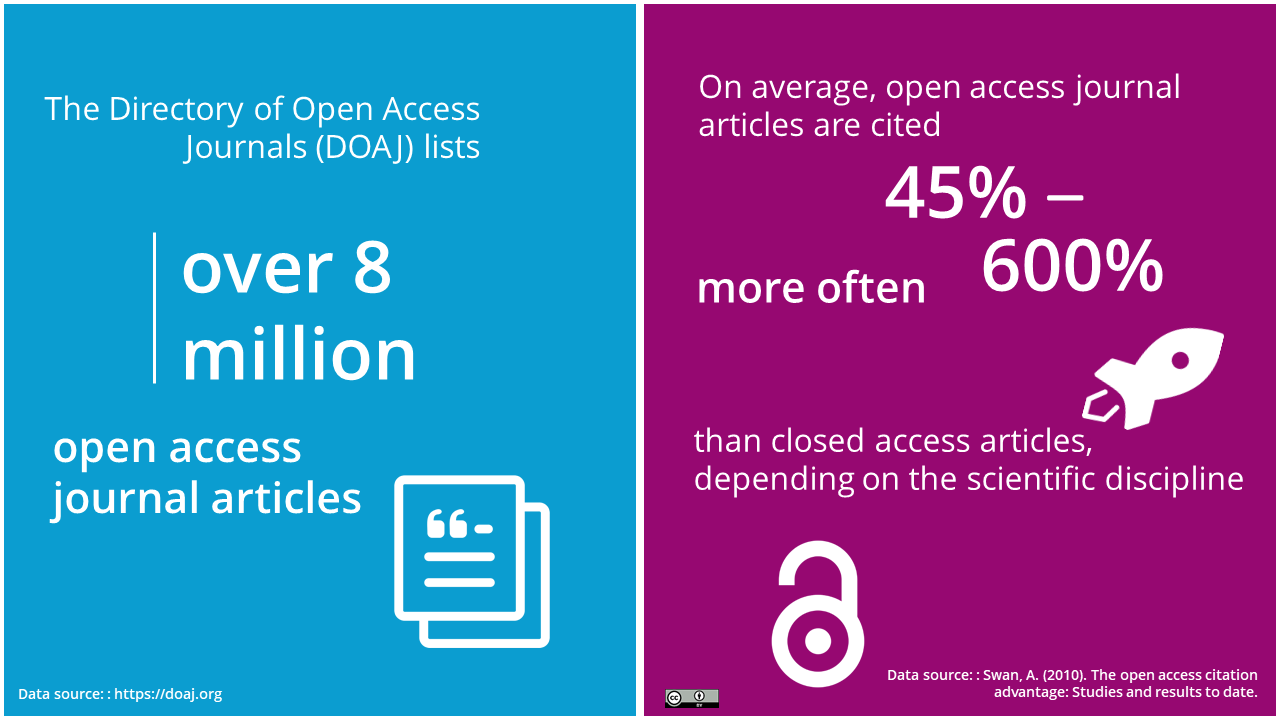
To date, there are only a few established fully open access journals in Middle Eastern, North African and Islamic Studies. They include, for example Acta Orientalia, the Journal of Arabic and Islamic Studies, and Aethiopica. These journals are often edited by scholars at research institutes. However, it should be noted that in the Middle East and in Asia there is a wide range of mostly university-based open access journals that are also listed in the Directory of Open Access Journals (DOAJ). In addition, open access journals that use the open source software Open Journal Systems (OJS) have a much greater linguistic diversity than, for example, the articles listed in the subscription database Scopus (see Khanna et al. 2022, Fig. 6). Nowadays, the hegemony of the English language is also called into question from a bibliodiversity perspective. For sciences relating to the MENA region, this challenge is an important aspect of the decolonisation of knowledge and science (see Berger 2021). The decolonisation of open access also plays a role in this regard, as open science and some of the business models applied lead to new global hierarchies and inequalities (see Piron 2018). Scholars from the German-speaking area still publish mainly in journals in which only isolated contributions or volumes are available in open access.
Apart from the relevant scholarly journals, many articles relating to the MENA region are published in journals with a different thematic focus (e.g., the Middle Ages, philosophy, medicine, law, sociology, or politics.).
Video zur Finanzierung von Open-Access-Artikeln
Quelle: Brinken, H. (2020). Finanzierung von Open-Access-Artikeln, open-access.network. https://doi.org/10.5446/49536 (CC BY 3.0 DE)
Open Access Books
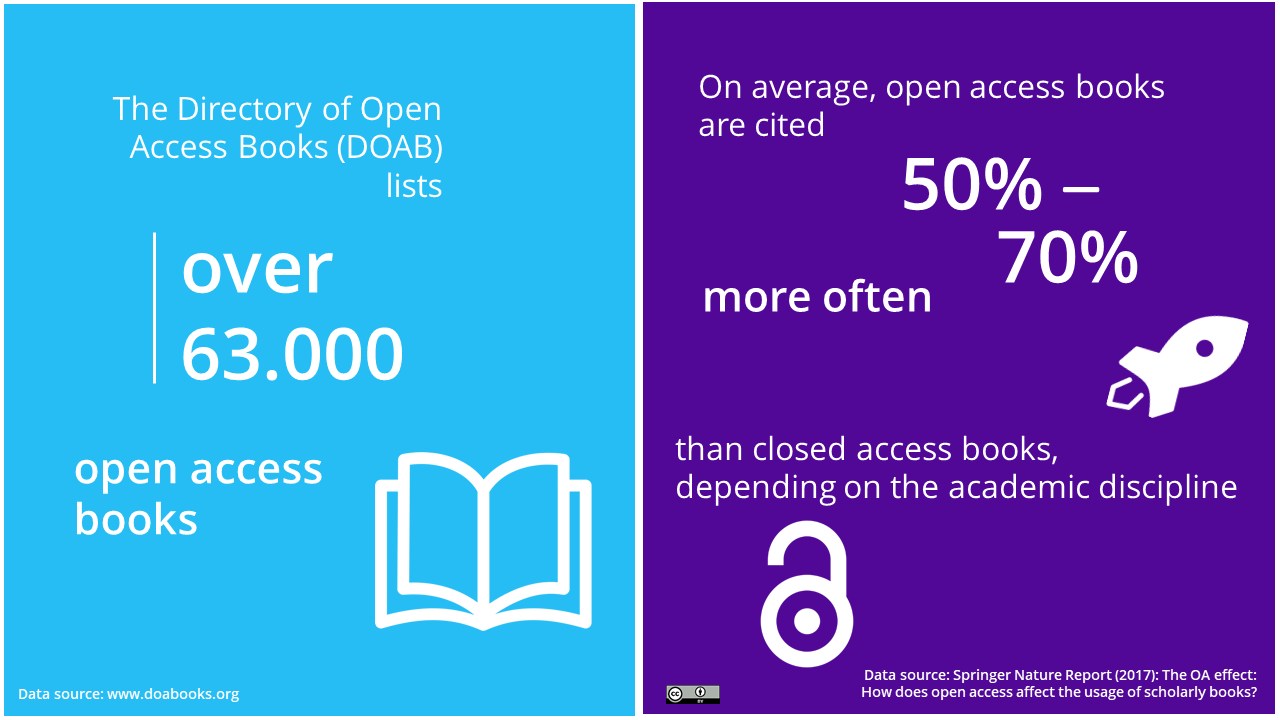
In the case of monographs and edited volumes, the share of open access publications is higher than in the case of journal articles. As of April 2024, the Directory of Open Access Books (DOAB) listed 556 publications under “Middle East”, of which the largest shares were published by Taylor & Francis (47 in total) and MDPI – Multidisciplinary Digital Publishing Institute (22 in total). Open access books are published primarily with established publishers. However, the publishers have successfully established models for the open access publication of series and individual volumes. One reason why open access is more widespread in the case of monographs and conference proceedings may be that researchers are increasingly required to make the results of publicly funded research and conferences available in open access. The team behind the blog Access to Mideast and Islamic Resources (AMIR) provides information on freely accessible material about the MENA region, including information about newly published open access books.
Manuscripts and Cultural Data
As a major part of research is text based, methods of the digital humanities are of particular importance for sciences related to the MENA region. Digitised copies of text-based sources can be supplemented with technical or contextual metadata and published under an open licence. The opening of research is taking place inter alia through the digitisation of manuscripts and periodicals, for example Jara'id: A Chronology of Arabic Periodicals (1800-1929). Thus, materials that are stored at great physical distances from each other can be brought together in different ways and published under an open licence, thereby enabling them to be reused. Important networks include the Islamicate Digital Humanities Network (IDHN) and the Open Islamicate Texts Initiative (OpenITI).
Disciplinary Repositories
With MENAdoc, the Specialised Information Service (FID) Middle East-, North Africa- and Islamic Studies offers the entire disciplinary range of an open access repository. MENAdoc offers green open access to edited volumes, monographs and individual articles. In some instances, entire series are made freely accessible in cooperation with institutions and publishers (e.g., with the Orient-Institut Istanbul and the Orient-Institut Beirut). In some cases, monographic series are published in diamond open access in MENAdoc, for example the MECAM Papers series and the series Diskussionspapiere — Wirtschaft, Gesellschaft und Geographie im Vorderen Orient (Discussion Papers – Economics, Society and Geography in the Middle East). Depending on the focus of the publications, research results are made available to the public in various disciplinary repositories, for example media studies, sociology, etc.
Video über das Zeitveröffentlichungsrecht
Quelle: Brehm, E. (2021). Zweitveröffentlichungsrecht für Wissenschaftler*innen, open-access.network. https://doi.org/10.5446/51789 (CC BY 3.0 DE)
Practical Tip
Finding Open Access Literature (in German)
Other Useful Offerings
- Arabic Collections Online (ACO) is a publicly available digital library of public-domain Arabic-language content.
- Arabic and Middle Eastern Electronic Library (AMEEL) is a web-based portal and a digital collection of information for the study of the Middle East, including its history, culture, development, and present situation.
- The Digital Assets Repository (DAR) is a system developed at the Bibliotheca Alexandrina, the Library of Alexandria, to create and maintain the Library's digital collections, which include digitised books in the public domain.
- The Hindawi Foundation is a not-for-profit organisation based in England, which publishes freely accessible Arabic-language books and translations without an open access licence.
- The Qatar Digital Library is a growing archive that covers the modern history and culture of the Gulf and wider region. Its holdings include archives, maps, manuscripts, sound recordings, photographs, and much more, complete with context-related explanations and links, both in English and in Arabic. The objects may be used and reused free of charge.
- Efforts are being made to digitally archive Master's theses and dissertations and to make them available to the public, inter alia via the Egyptian Universities Libraries Consortium.
- Qalamos offers direct access to metadata and digitised copies of Oriental manuscript collections in Germany. Its mission is "to provide the metadata and digitised copies of Oriental holdings of all German memory institutions".
- A further offering is the online database of the Museum für Islamische Kunst (Museum for Islamic Art) in Berlin, which provides information on objects and works. It is part of the online portal "Islamic·Art", which provides further open access materials.
- Middle Eastern and North African Newspapers is an open access collection sponsored by the Center for Research Libraries.
Literatur
- Berger, M. (2021). Bibliodiversity at the Centre: Decolonizing Open Access. Development and Change 52(2), 383–404. https://doi.org/10.1111/dech.12634.
- Khanna, S., Ball, J., Alperin, J. P., & Willinsky, J. (2022). Recalibrating the scope of scholarly publishing: A modest step in a vast decolonization process. Quantitative Science Studies 3(4), 912–30. https://doi.org/10.1162/qss_a_00228.
- Piron, F. (2018). Postcolonial Open Access. In U. Herb & J. Schöpfel (Eds.), Open divide: critical studies on open access. Library Juice Press. https://corpus.ulaval.ca/entities/publication/2f42da75-af39-46b1-8ce1-f48ff76c059e
Weiterführende Literatur
- Augustin, L. M. (2016, 01st September). Open Access publishing in and about the Middle East and North Africa: prospects and challenges. TRANSREGIONAL ACADEMIES. https://academies.hypotheses.org/1954.
- Cross, C., Romanov, M., & Miller, M. T. (2023, 11th July). About Islamicate Digital Humanities. http://islamicate-dh.github.io/about/.
- Hanafi, S., & Rigas, A. (2015). Knowledge Production in the Arab World: The Impossible Promise. Taylor & Francis Ltd.