
Video zur Finanzierung von Open-Access-Artikeln
Quelle: Brinken, H. (2020). Finanzierung von Open-Access-Artikeln, open-access.network. https://doi.org/10.5446/49536 (CC BY 3.0 DE)
Open Access in German Studies
A trend towards greater openness and acceptance of open access can be observed in German studies. In this respect, the discipline resembles other philologies, for example comparative literature, where similar developments are taking place. Nonetheless, the fixation on print is still dominant in German studies, and the publisher–academic reputation nexus remains close. Besides concerns about scholarly quality, prejudices towards open access relate also to the long-term availability of research contributions published exclusively online. Bibliometric indicators such as the Journal Impact Factor , citation rates etc. generally play only a minor role in publishing practice in German studies.
The business models of many publishing houses with a humanities focus are in a state of flux, not least because of the open access policies of the major national research funding organisations. Prestigious publishers now enable and promote gold open access and are also (more) open towards green open access. At the same time, there are an increasing number of institutional offerings to promote open access monographs and edited collections. They include, for example, open access publication funds, the payment of publication charges from third-party funds, and the German Research Foundation’s (DFG) Publication Grants Programme. These developments result in more works being published open access. In addition, more and more researchers are availing of the possibility of self-archiving their publications in the repositories of their university libraries or research institutions or in central disciplinary repositories such as GiNDok. This can be expected to continue slowly but surely.
The German Association of Germanists (Deutscher Germanistenverband, DGV) has yet to adopt a clear position on open access. However, the association established two working groups (Digitales in Forschung und Lehre [Digitality in Research and Teaching] and Germanistik im digitalen Zeitalter [German Studies in the Digital Age]) to address the topic of digitalisation and the changing work, teaching, and research practices in the discipline. Engagement with open access publishing plays an important role in this regard. The working group Germanistik im digitalen Zeitalter has since been dissolved.
The responsible persons at the Institut für Textkritik (Institute for Textual Criticism) frequently express criticism of open access.
Open Access Journals
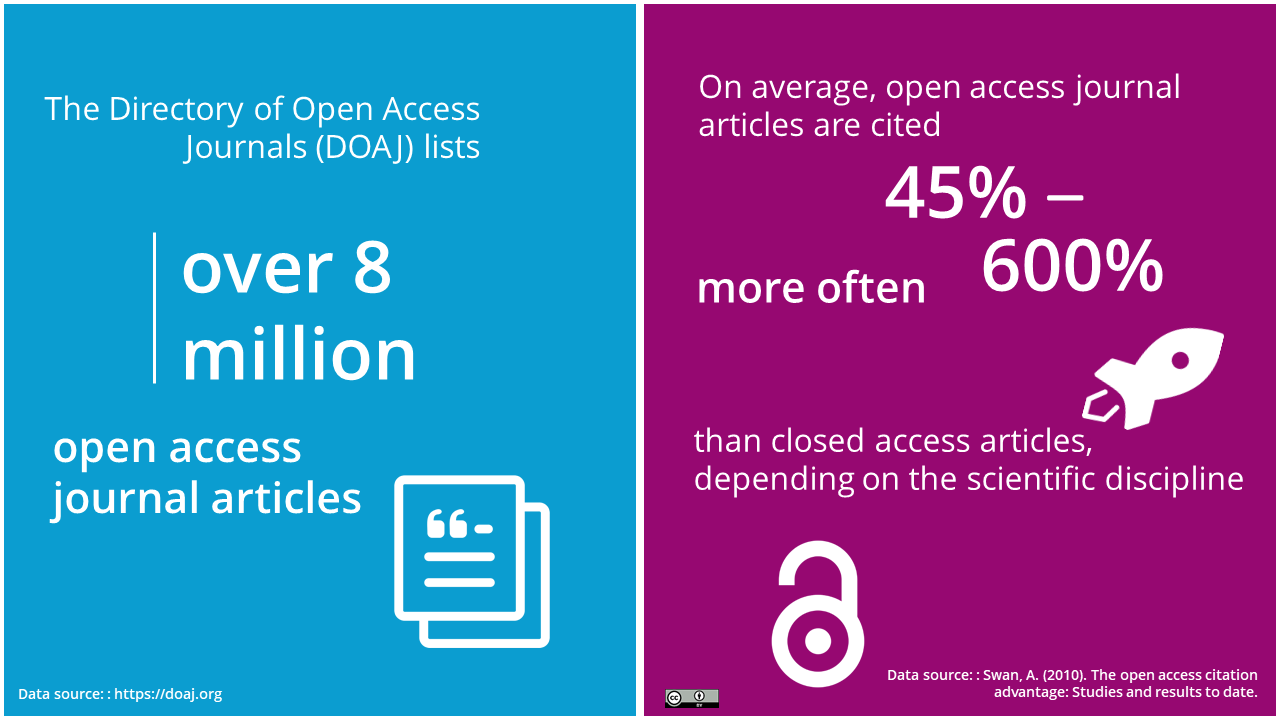
As of November 2024, the Directory of Open Access Journals (DOAJ) listed 14 entries under “German literature” and 4 entries under “Germanic languages” (not including Scandinavian languages).
Important open access journals in German studies include:
- IASLonline
- Philologie im Netz (PhiN)
- Textpraxis. Digitales Journal für Philologie (DOAJ)
- Linguistik online (DOAJ)
- Zeitschrift für interkulturelle Germanistik (ZiG)
- literaturkritik.de
- Transit. A Journal of Travel, Migration and Multiculturalism in the German-speaking World (DOAJ)
- Zeitschrift für digitale Geisteswissenschaft (ZfdG)
Also worthy of mention (although not listed in the DOAJ) are the journals Germanistische Mitteilungen and Zeitschrift für Wortbildung.
Open Access Books
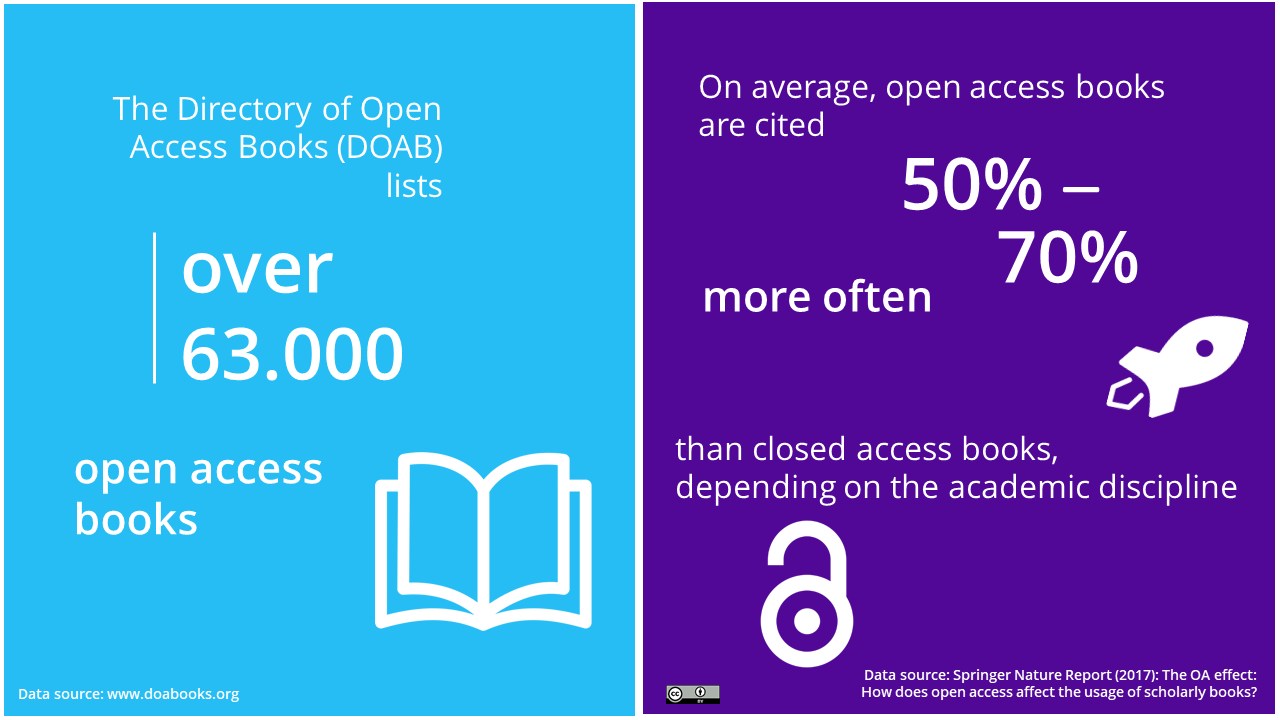
As of March 2024, the Directory of Open Access Books (DOAB) listed 166 titles under “German literature”, 217 titles under “German language”, 22 titles under “German linguistics”, and 171 titles under “German studies”.
German-studies-related books published under a diamond open access model – that is, published open access without charging book processing charges (BPCs) – can also be found under German Studies on the Open Book Publishers website.
Disciplinary Repositories
The most important repositories in the field of German studies include GiNDok, which is operated by the Specialised Information Service (FID) German Studies and is part of the Virtual Library of German Studies – Germanistik im Netz (GiN), and the Publication Server of the Leibniz Institute for German Language (IDS):
The IDS publication server holds mainly publications from the area of German linguistics. GiNDok is used by individual researchers, publishers, institutions, and projects as a platform for publishing and self-archiving works from all sub-disciplines of German studies and almost all text genres. The Specialised Information Service (FID) German Studies also offers an e-journal hosting service based on the software application Open Journal Systems (OJS).
The following repositories of neighbouring disciplines are also of importance for German studies:
- CompaRe – the specialised repository for comparative literature
- AMAD – an interdisciplinary open access repository and scholarly blog for research on the Middle Ages
- PsyArxiv (especially in German linguistics)
- PhilPapers
An overview of relevant repositories in the area of language and literature is also provided by the Open Directory of Open Access Repositories (OpenDOAR).
Video über das Zeitveröffentlichungsrecht
Quelle: Brehm, E. (2021). Zweitveröffentlichungsrecht für Wissenschaftler*innen, open-access.network. https://doi.org/10.5446/51789 (CC BY 3.0 DE)
Practical Tip
Finding Open Access Literature (in German)
Other Offerings
The Specialised Information Service (FID) German Studies has published a series of German-language tutorials that provide information on, among other things, the benefits of open access publishing, as well as listing in a compact and understandable way relevant practical information on topics such as long-term archiving and the citation of digital publications.
Further Reading
- Baillot, A. (2019). Digitales Publizieren und Open Access in der Germanistik. Mitteilungen des Deutschen Germanistenverbands, 66(3), 237–247. https://doi.org/10.14220/mdge.2019.66.3.237
- Eve, M. P. (2014). Open access and the humanities. Contexts, controversies and the future. Cambridge University Press. https://doi.org/10.1017/CBO9781316161012
- Messerschmidt, N. (2011). Open Access in den Literaturwissenschaften. Ergebnisse qualitativer Interviews mit Wissenschaftlern der Deutschen Literatur. https://doi.org/10.18452/14147
- Söllner, K. (2017). Geisteswissenschaften. In K. Söllner & B. Mittermaier (Eds.), Praxishandbuch Open Access (1st ed., pp. 247–253). De Gruyter. https://doi.org/10.1515/9783110494068
Content editor of this page: Dr Volker Michel, Specialised Information Service (FID) German Studies (as of December 2021)
Revised by Stefan Hartmann (in November 2024).