
Open Access in Religious Studies
In Germany, religious studies is one of the small disciplines, and is considered an independent humanities and cultural studies discipline distinct from the theologies. In other countries, for example in Britain and North America, the (institutional) separation of religious studies and the theologies is to some extent less pronounced.
Research in religious studies takes place in a professionally and methodologically broad, heterogeneous environment. Overlaps exist inter alia with the ethnological disciplines, with sociology, philosophy, historical studies and classical studies, and also with various area studies disciplines (e.g. African Studies) and the theologies. In religious studies, as in other humanities disciplines, great importance continues to be attached to print books in general, as well to the publication of contributions in edited collections and conference proceedings.
However, in dialogue with the religious studies community, an increasing openness towards the reception and production of open access publications is apparent. Reservations towards open access relate inter alia to fears of compromised quality and additional effort and costs (e.g. when converting journals to open access), as well as to concerns with regard to higher publication costs for authors.
To date, neither the German Association for the study of Religion (Deutsche Vereinigung für Religionswissenschaft, DVRW), nor the European Association for the Study of Religions (EASR) nor the International Association for the History of Religions (IAHR) has taken a clear position on open access. The DVRW’s journal, Zeitschrift für Religionswissenschaft, is still published in closed access. By contrast, associations for the study of religion in some other European countries (inter alia the Czech Association for the Study of Religions and the British Association for the Study of Religions) have been successfully publishing open access journals for some years now.
In the English-language literature, the topic of open access in religious studies has been reflected on in several contributions – both from the perspective of the editors of individual scholarly journals (Drees, 2015; Drees, 2017; Wildman et al., 2019; Petersen, 2021) and from the perspective of individual scholars (Clasquin-Johnson, 2008; Cavallin, 2013). An added value of open access is seen especially in the fact that it can also make scientific participation easier for financially insecure institutions and researchers worldwide, who are unable to access expensive licensed resources.
For authors, on the other hand, open access may also become a hurdle if, for example, they cannot afford the sometimes-considerable publication fees charged by the publishers (Frank et al., 2023).
Open Access Journals
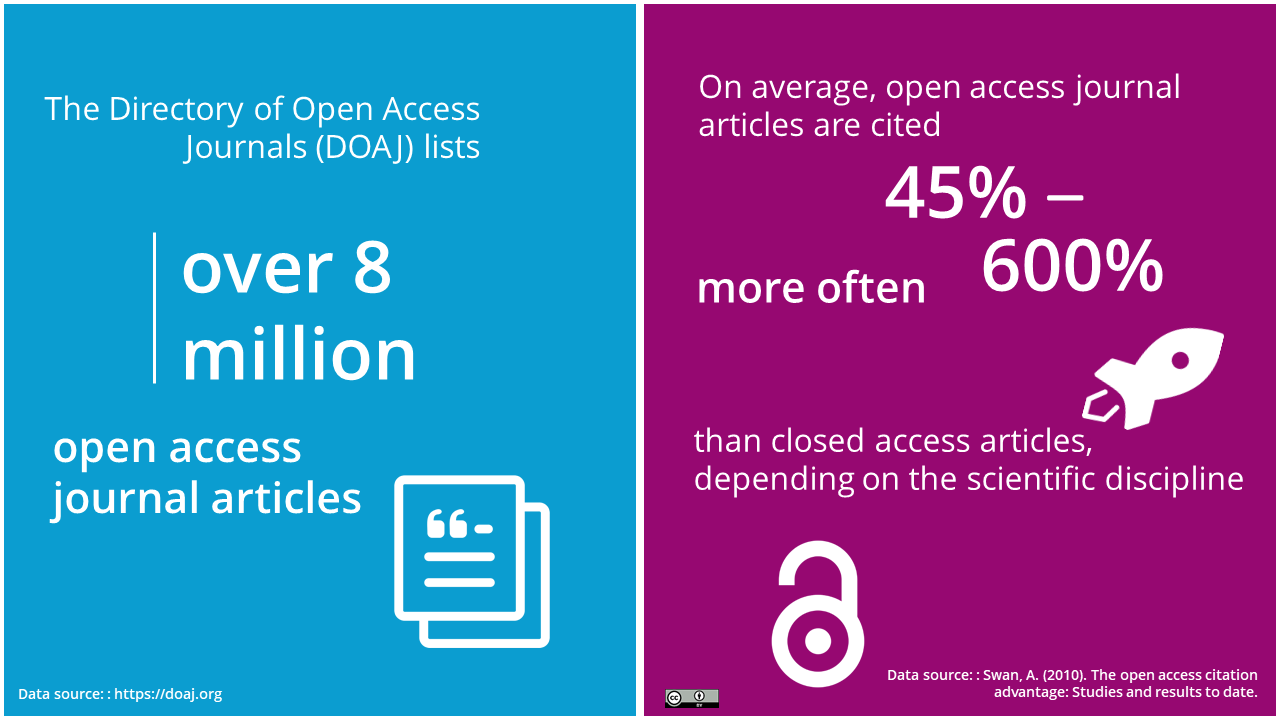
As of April 2024, the Directory of Open Access Journals (DOAJ) listed 131 entries under the subject Religions. Mythology. Rationalism.
A closer look at this list reveals that journals relating to a specific religion, or journals with a theological focus, are also assigned to this subject area. If one extends the search query to include journals that are listed under individual religions (Islam, Judaism, Buddhism), one achieves a more extensive result (451 entries). Here, the challenge intimated in the previous section becomes clear: on the one hand, in the international context, the discipline of religious studies cannot be clearly distinguished from the theologies; on the other hand, overlaps exist with numerous other humanities and cultural studies disciplines, as well as with the social sciences.
Important open access religious studies journals include:
- Approaching Religion*, DOAJ
- Journal of Global Buddhism*, DOAJ
- Temenos: Nordic Journal of Comparative Religion*, DOAJ
- International Journal of Religious Tourism and Pilgrimage*, DOAJ
- Japanese Journal of Religious Studies*, DOAJ
- Journal for Religion, Film and Media*, DOAJ
- Entangled Religions*, DOAJ
- Religion and Society: Advances in Research*, DOAJ
- Secularism and Nonreligion, DOAJ
- Debates do NER*, DOAJ
- Zygon*
(Journals with an asterisk do not levy article processing charges [APCs])
The journals listed above reflect the disciplinary and geographical spread of open access endeavours. From an international perspective, there is therefore a very great diversity of open access journals with content of relevance to religious studies – often on very specific topics. Most of these journals are published at universities and do not charge authors any publication fees. Thus, in the religious studies community the diamond open access model is more widespread than the gold open access model. In addition, there is still a large body of subscription-based journals, including, in particular, the “renowned” journals in the discipline. Some of these journals offer authors the option to make their articles open access for a fee.
Mention should also be made of the Zeitschrift für junge Religionswissenschaft, the only publication to date for early-stage researchers in the DACH region (Germany, Austria and Switzerland). It, too, is published open access.
A large number of open access journals in the field of religious studies have not yet been listed in the DOAJ. They include inter alia: Religio: Revue pro religionistiku, the Journal of the British Association for the Study of Religions, the Marburg Journal of Religion and REVER: Revista de Estudos da Religião.
Video zur Finanzierung von Open-Access-Artikeln
Quelle: Brinken, H. (2020). Finanzierung von Open-Access-Artikeln, open-access.network. https://doi.org/10.5446/49536 (CC BY 3.0 DE)
Open Access Books
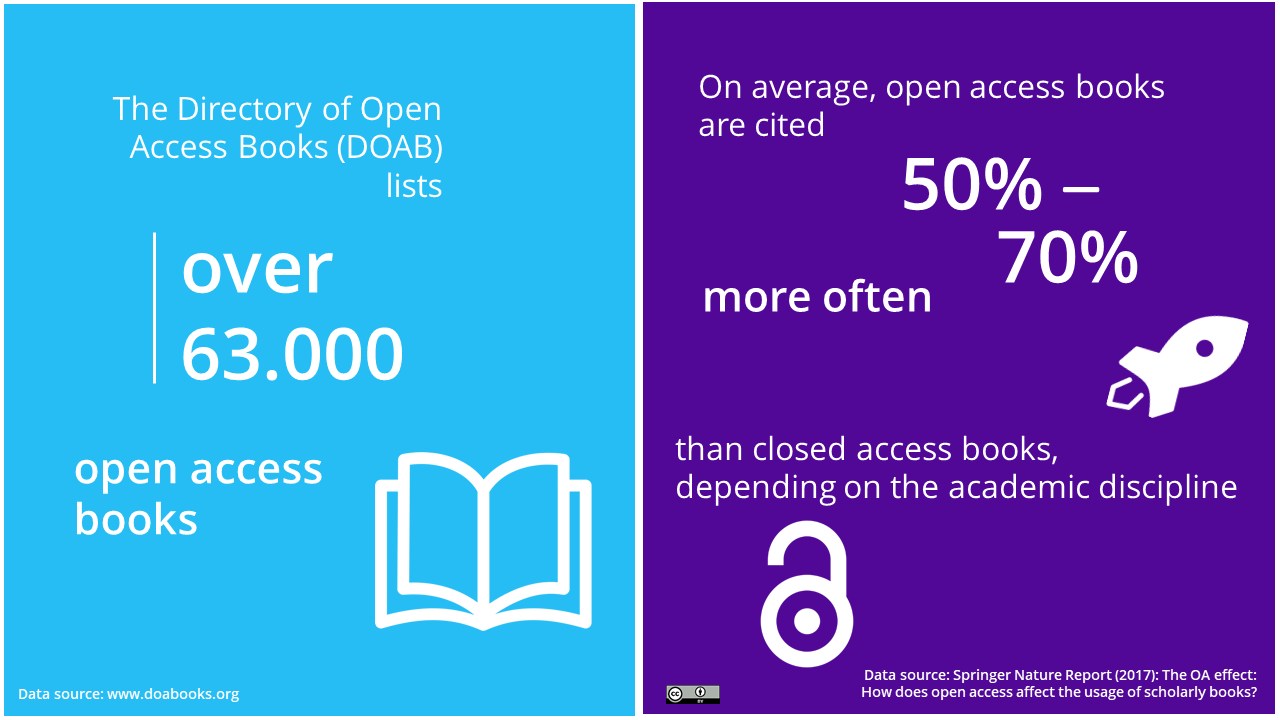
As of April 2024, the Directory of Open Access Books (DOAB) listed 142 titles under the subject Religion: general, and the online library of open access books OAPEN listed 149 titles under Religion: general.
In religious studies, the publication of books in open access has only recently gained in importance. Some publishers, for example transcript and DeGruyter, offer this option, and it has already been availed of (in addition to the print version) for many religious studies titles. The greatest challenge in this regard is considered to be the financing of the publication fees (book processing charges, BPCs), which is most likely possible within the framework of a project.
Disciplinary Repositories
Both in the German-speaking area and internationally, there is currently only one disciplinary repository for religious studies. It is managed by the Specialised Information Service (FID) for the Study of Religion at Tübingen University Library. The repository can be searched and the archived content accessed via the bibliography of the study of religion RelBib, the portal of the FID for the Study of Religion (see self-archived works in RelBib). In addition, the FID for the Study of Religion offers authors from the German-speaking area (DACH) individual support to provide green open access to their works (within the framework of a comprehensive self-archiving service). As a low-threshold alternative, an internationally oriented self-archiving form with the possibility to upload is offered via RelBib.
Depending on the field of research, other disciplinary repositories may be of relevance for authors in religious studies, for example the Social Science Open Access Repository (SSOAR). Repositories with an area studies focus, for example the FID4SA-Repository for South Asian studies or MENAdoc for Middle East and Islamic studies, can also be availed of.
In addition, the thematically focused repository Science and Religion Dialogue Prints (SciRePrints) is provided at the University of Latvia. SciRePrints is specifically intended for the self-archiving of publications and preprints about – or pertinent to – the dialogue between science and religion.
Video über das Zeitveröffentlichungsrecht
Quelle: Brehm, E. (2021). Zweitveröffentlichungsrecht für Wissenschaftler*innen, open-access.network. https://doi.org/10.5446/51789 (CC BY 3.0 DE)
Practical Tip
Finding Open Access Literature (in German)
Other Offerings
With RelBib, the FID for the Study of Religion at Tübingen University Library operates an international online bibliography for the study of religion that can be used free of charge. RelBib collaborates very closely with the international bibliography for theology and religious studies Index Theologicus (IxTheo). In RelBib, monographs, journals, journal articles and edited collections, websites, blogs, research data, and many other resources are indexed. As new titles and updates are regularly imported, RelBib offers the most up-to-date specialised information. A steadily growing number of journals of relevance to religious studies are continuously analysed at article level. As RelBib’s focus is on providing open access content, priority is given to titles with immediate and open access to full texts. Search results can be narrowed to freely accessible titles by applying the open access filter. In addition, there is also a full-text search option in RelBib.
With the Open Journal Systems (OJS) platform RelBib Open Journals, the FID for the Study of Religion promotes the conversion of journals or series to open access or the founding of new open access journals and series. In addition to the publishing system, the FID provides advice on these topics to interested parties beforehand and supports editors in founding new open access journals or series or in migrating existing journals or series to open access. It also offers hands-on support with technical queries.
Blogs
- RelBib Newsfeedaggregator: the latest contributions from international blogs and podcasts of relevance to religious studies
Platforms
- Mapping Religionswissenschaft: a project for thematic exchanges in religious studies
- Netzwerk un-sichtbar: a project for the transfer of religious studies knowledge to the public
Databases
- Database of Religious History (DRH): a collaborative open access encyclopaedia of religious cultural history
- The Association of Religion Data Archives (ARDA): a large collection of freely available statistical data from religion-related population surveys
Further open access religious studies content is made available on the platforms Project Muse (as of July 2024, 293 titles: monographs in the research area “religion”) and JSTOR (as of July 2024, 34,915 titles: essays from journals and edited volumes on the subject of “religion”.
Open Science in Religious Studies
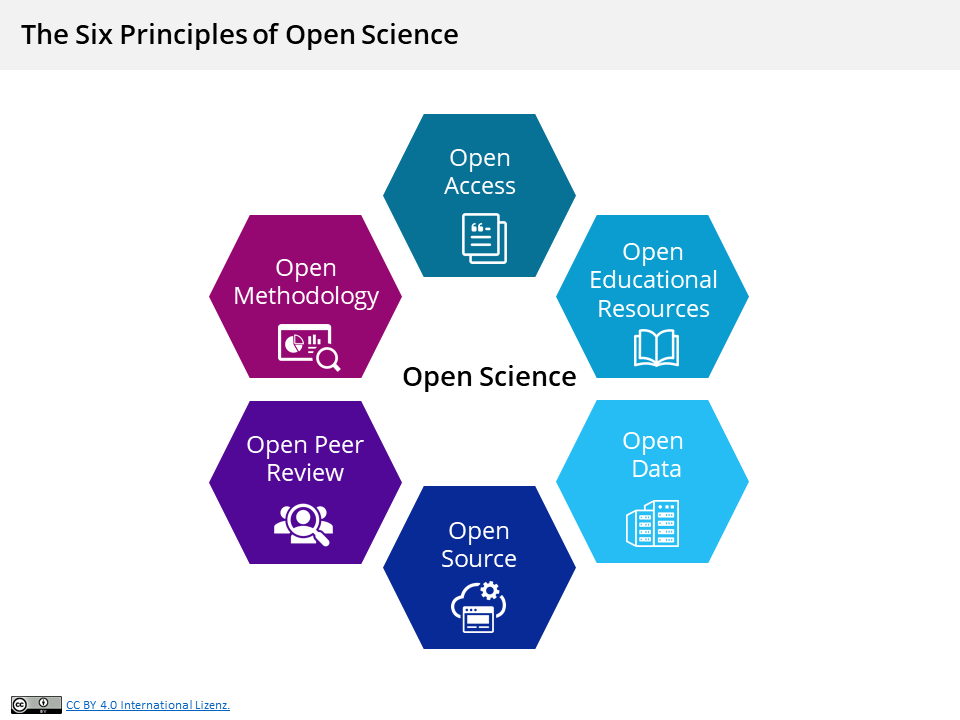
To date, open science endeavours have been neither very pronounced nor centrally coordinated in the small discipline of religious studies. Nonetheless, initial activities are apparent, especially in the area of open data. In 2019, with support from the DVRW, the FID for the Study of Religion conducted a survey on research data in the discipline (FID for the studies of Religion & DVRW, 2020), the results of which also received attention in the religious studies community (Koch, 2020). The central indexing of research data of relevance to religious studies was one of the desiderata that emerged from the survey. As a result, the targeted search for research data was introduced in RelBib.
CERES (the Center for Religious Studies) at Ruhr-Universität Bochum is involved as a participating institution in the German National Research Data Infrastructure (NFDI) Consortium for the Historically Oriented Humanities, 4memory. One example of a digital humanities project for the digitisation of religious objects is DiGA – Digitization of Gandharan Artefacts, which is located at CERES. The provision and archiving of the image and object data are carried out in collaboration with the Specialized Information Service (FID) for South Asia.
Comparable developments are also to be expected in the future in the other areas of open science (e.g. Hermann, 2021).
References
- Cavallin, C. (2013). Religious studies and the knowledge society: Open access as contributing to an open society. In F. Sardella, & R. Sain (Eds.), The sociology of religion in India (pp. 105–113). Abhijeet Publications.
- Clasquin-Johnson, M. (2008). Finding, using and creating open-access religious studies academic material on the Internet. Journal for the Study of Religion, 21(2). https://doi.org/10.4314/jsr.v21i2.65741
- Drees, W. B. (2017). Green open access for interesting contributions. Zygon, 52(1), 3–8. https://doi.org/10.1111/zygo.12329
- Drees, W. B. (2015). Publishing in a changing world. Zygon 50(3), 559–568. https://doi.org/10.1111/zygo.12199
- FID for the Study of Religion & DVRW (2020). Umfrage zum Thema Forschungsdaten in der Religionswissenschaft. https://relbib.de/Content/survey_results#content
- Frank, J., Foster, R., & Pagliari, C. (2023). Open access publishing – Noble intention, flawed reality, Social Science & Medicine, 317, Article 115592. https://doi.org/10.1016/j.socscimed.2022.115592
- Hermann, A. (Ed.). (2021). Experimente mit digitaler Lehre: Überlegungen und Modelle jenseits einer Defizitperspektive. Universitäts- u. Landesbibliothek Bonn. https://doi.org/10.48565/bonndoc-3
- Koch, A. (2020). Religionswissenschaft und digital humanities. Verkündigung und Forschung, 65(2), 152–158. https://doi.org/10.14315/vf-2020-650211
- Petersen, A. C. (2021). Open access, the humanities, and contemplation through science. Zygon, 56(3), 541–546. https://doi.org/10.1111/zygo.12736
- Wildman, W. J., Bulbulia, J., Schjødt, U., & Sosis, R. (2019). Is the Open Access movement about to get real? Religion, Brain & Behavior, 9(2), 105–107. https://doi.org/10.1080/2153599X.2019.159507
Content editor of this page: Mareike Heinritz, Head of the Specialised Information Service for the Study of Religion (FID Religionswissenschaft) and the Bibliography of the Study of Religion (RelBib) at Tübingen University Library. (Last updated: October 2024).